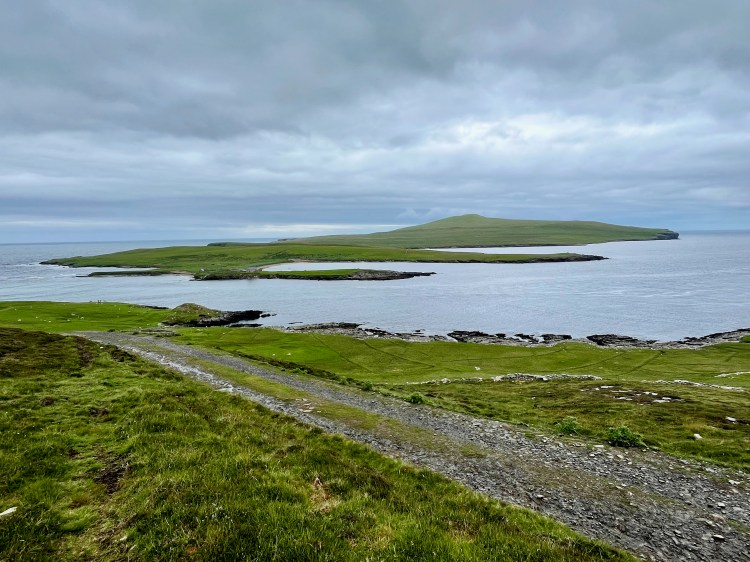
Noss is an island off an island (Bressay) off an island (Mainland Shetland) off an Island (Britain) but don’t let this put you off getting there, it is actually quite easy.
Noss National Nature Reserve (NNR) features one of the three great seabird cities on Shetland (the others being Herma Ness and Sumburgh Head). It is no surprise why these are so strategic for the birds, they make the most northerly, southerly and easterly points respectively which means closer to the fishing grounds.
There are two ways to see Noss, one is from above by walking around the Island (having taken a boat from Lerwick to Bressay and then a short passenger service from Bressay to Noss). The other is to see it from below by taking a boat trip from the centre of Lerwick. We did both so in this post we serve Noss two ways.
From Above
We stayed on Bressay the night before so we were overlooking the Noss Ferry at 10am before the first service.
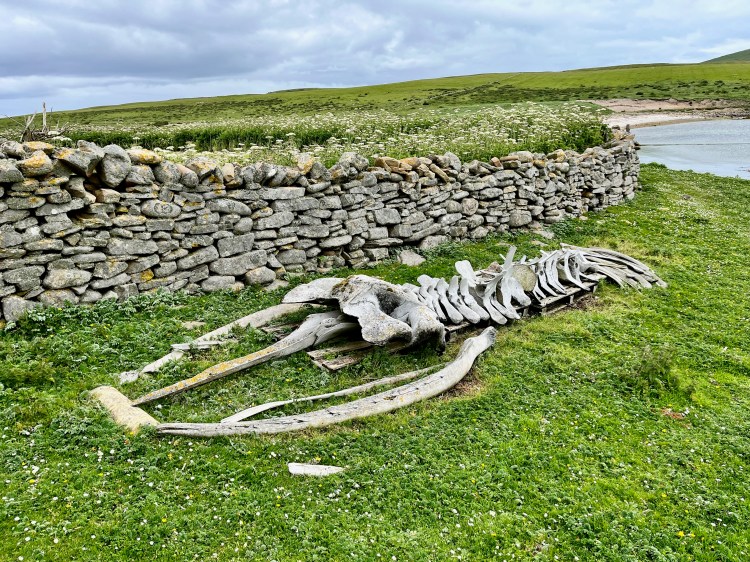
It was a short 5 minutes or so onto the Island and the brief welcome at the visitors centre. One point of interest was seeing a whole Fin Whale skeleton.
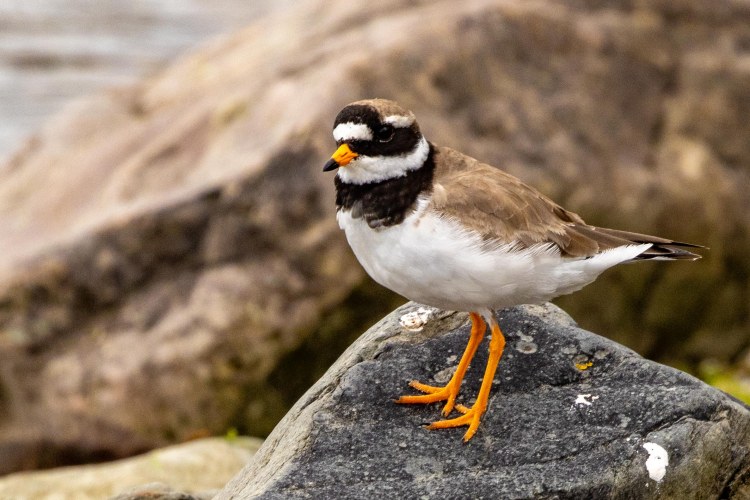
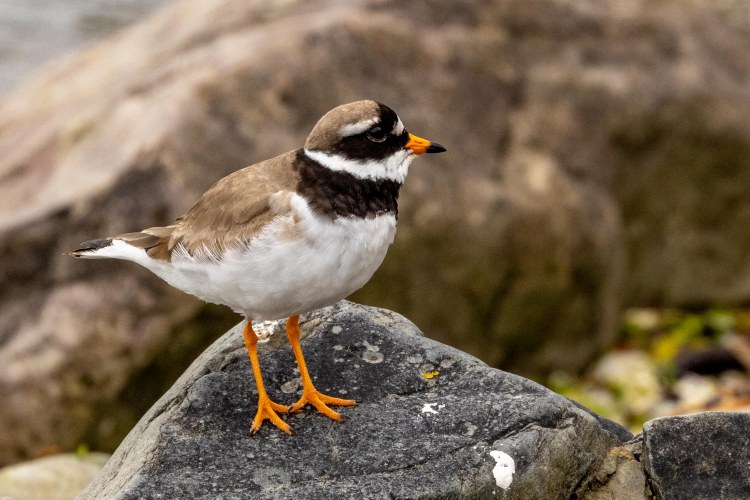
On the nearby beach a Ringed Plover was showing well.
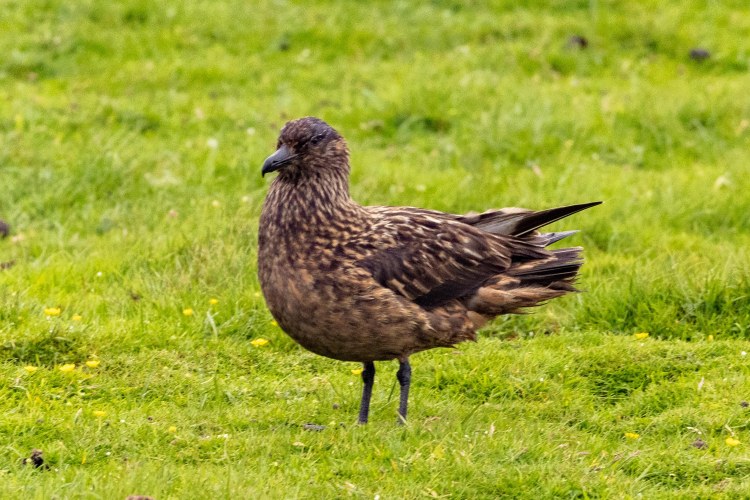
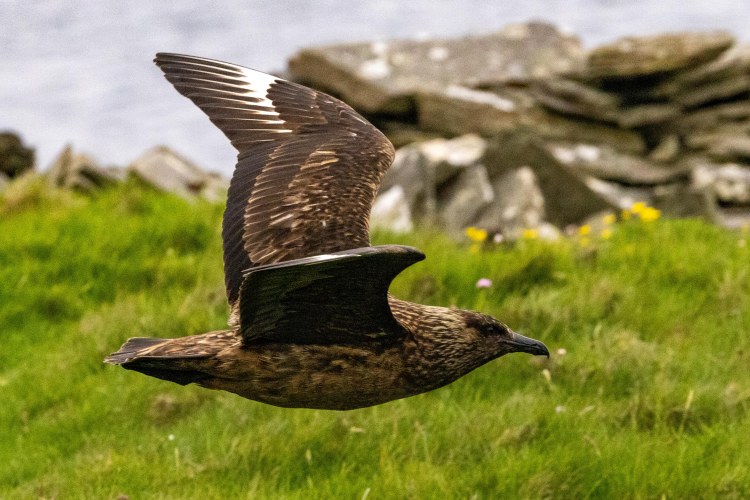
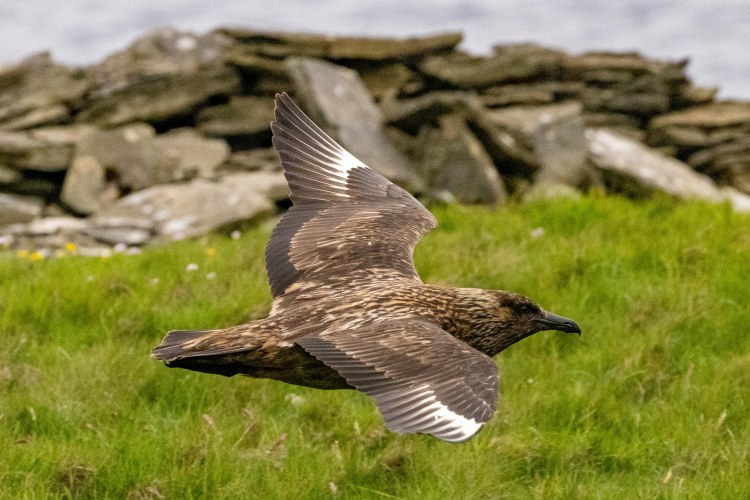
We set off to walk the full coast of the Island anti-clockwise. There were lots of Great Skuas around but they seemed fairly chilled if we stuck to the coast.
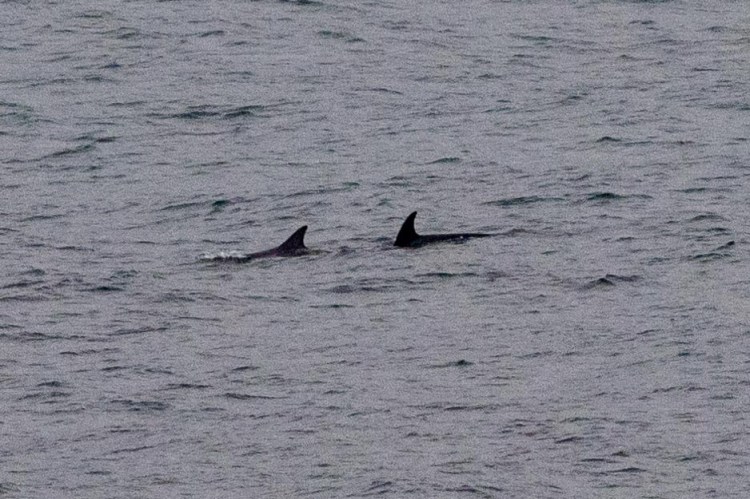
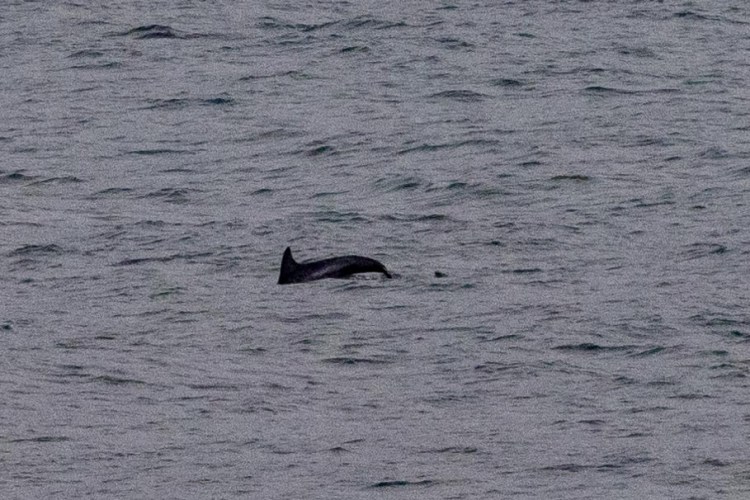
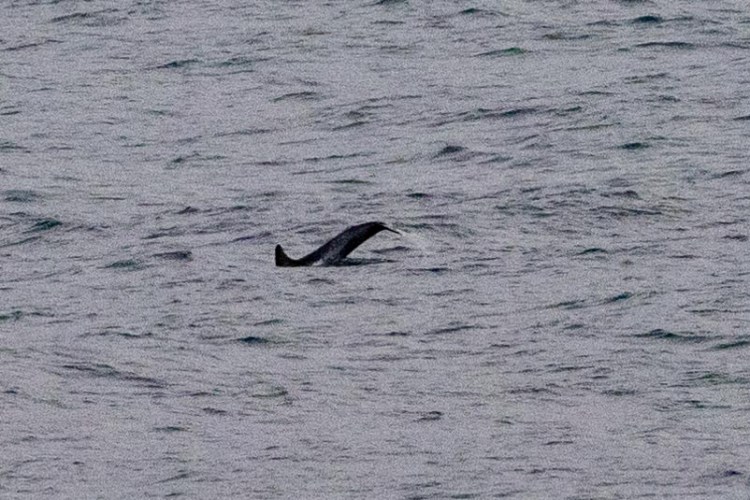
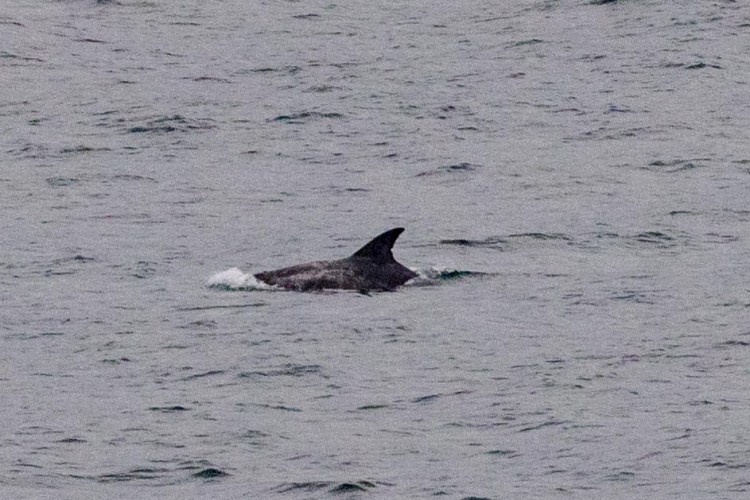
Continuing to the southern point of the Island we had gained some altitude and were delighted to see some distant Dolphin feeding. I fired off some photos which certainly aren’t keepers but enabled an identification of White-Beaked Dolphin – see distinctive marking on tail stock.
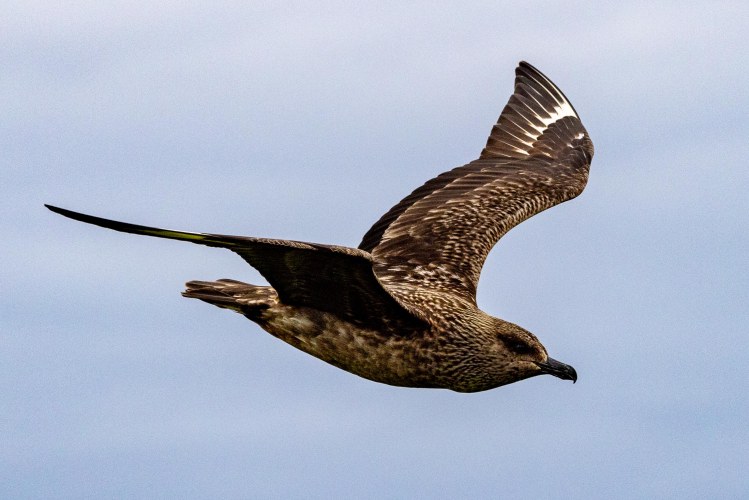
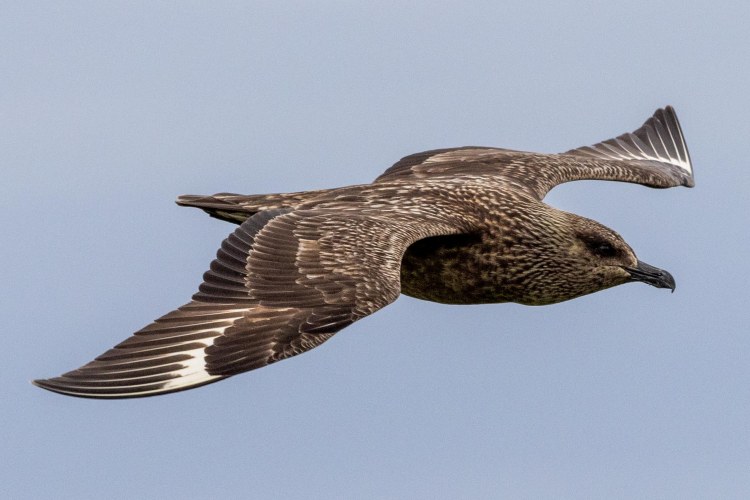
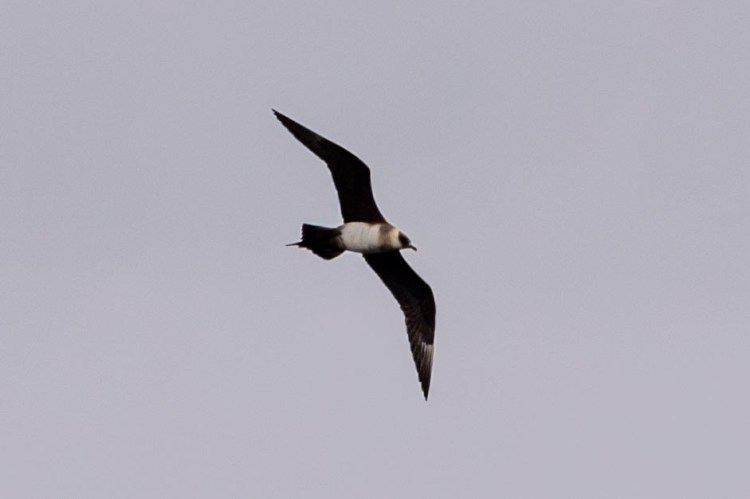
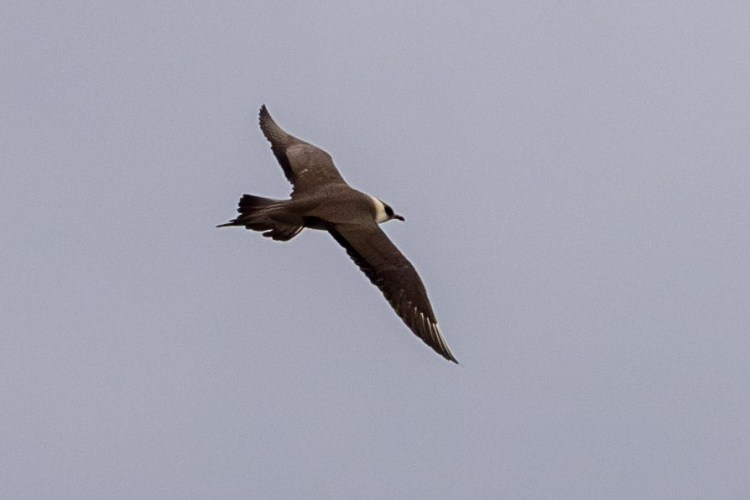
At the same time a Pale Morph Arctic Skua was flying around on the currents.
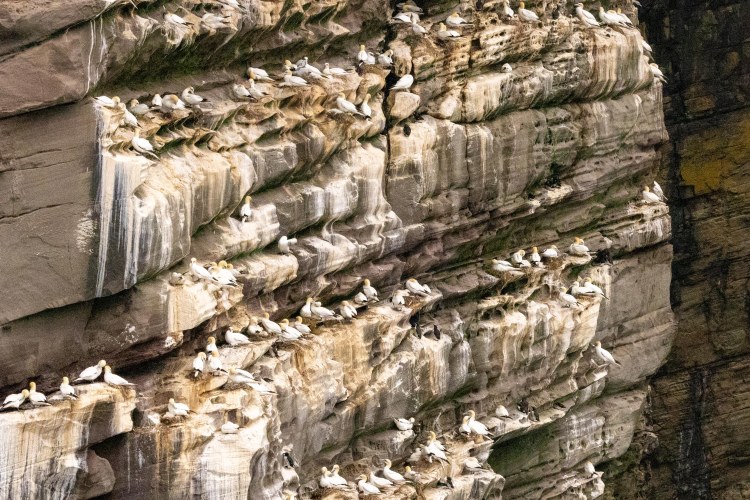
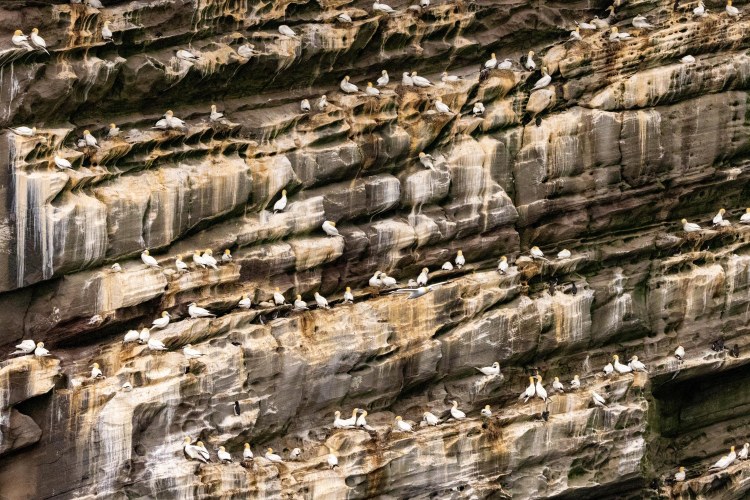
We now approached the sea-cliffs properly and overlooked the various tiers of birds nesting. The views of the cliffs were impressive from the high point.
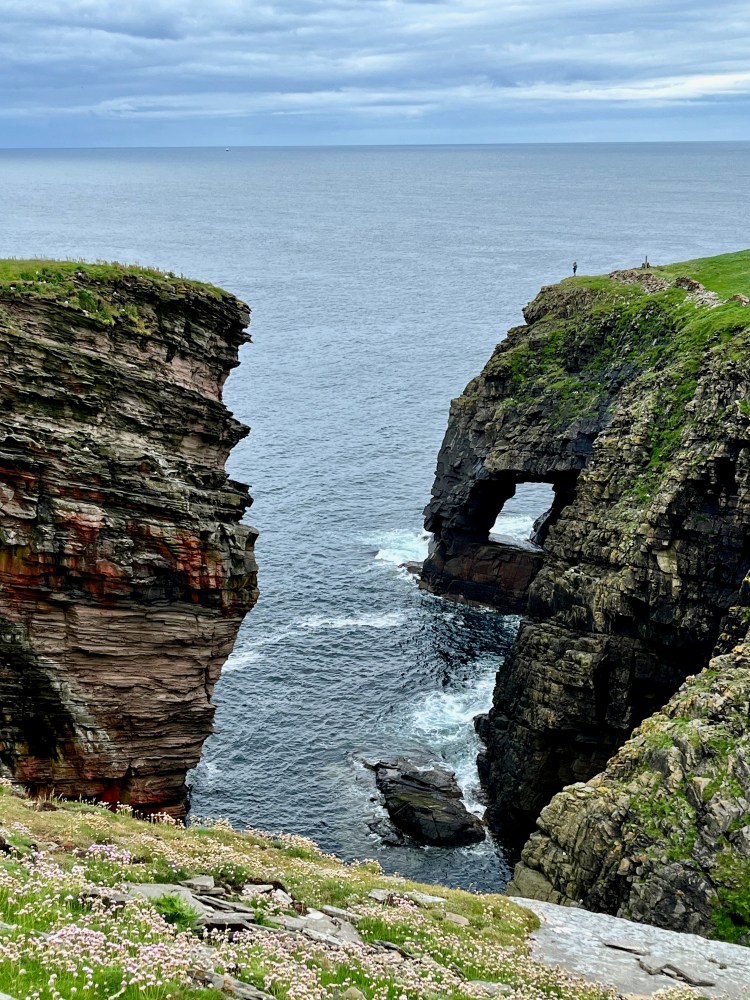
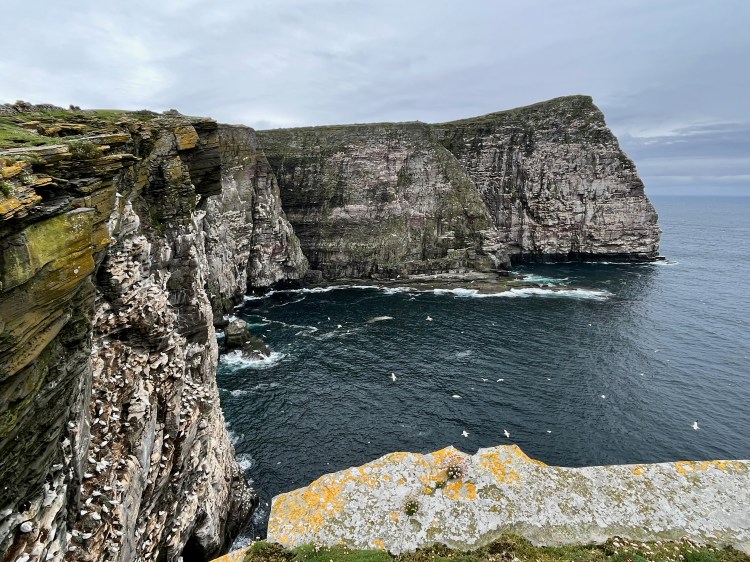
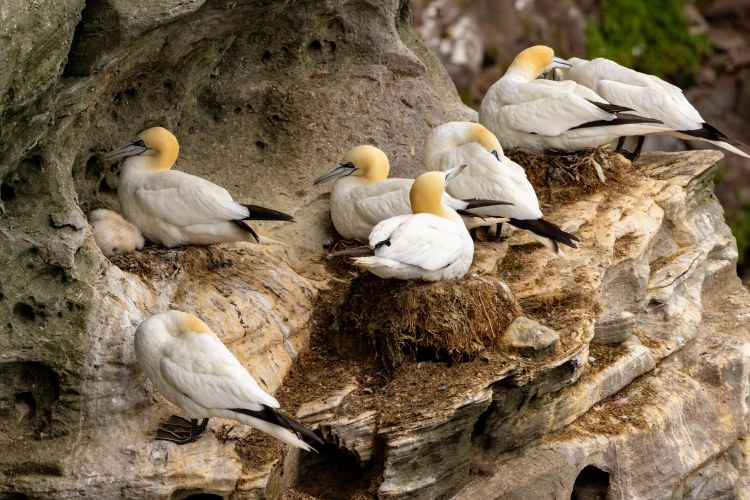
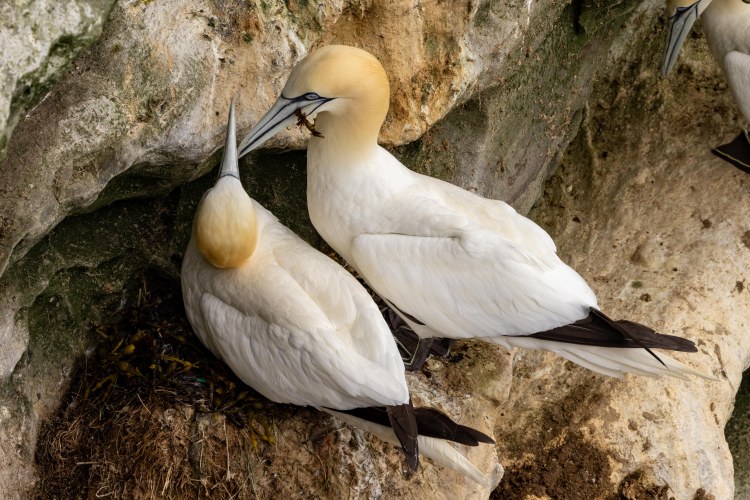
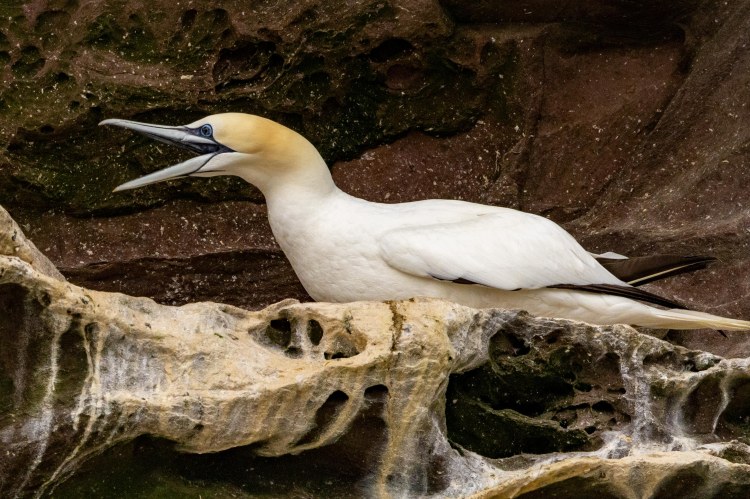
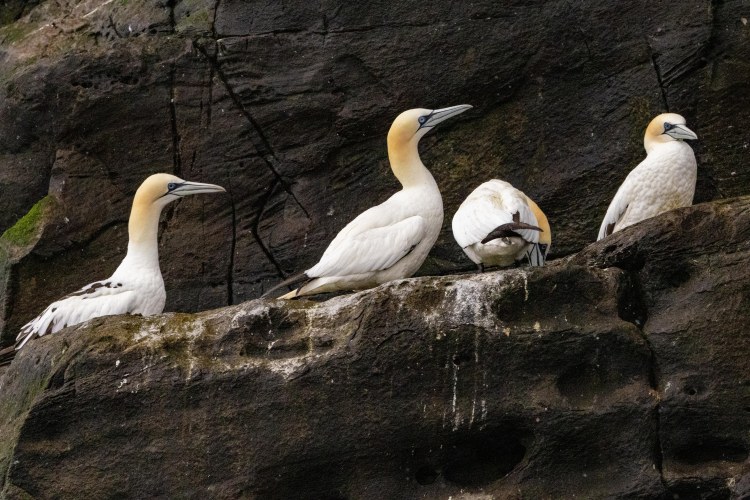
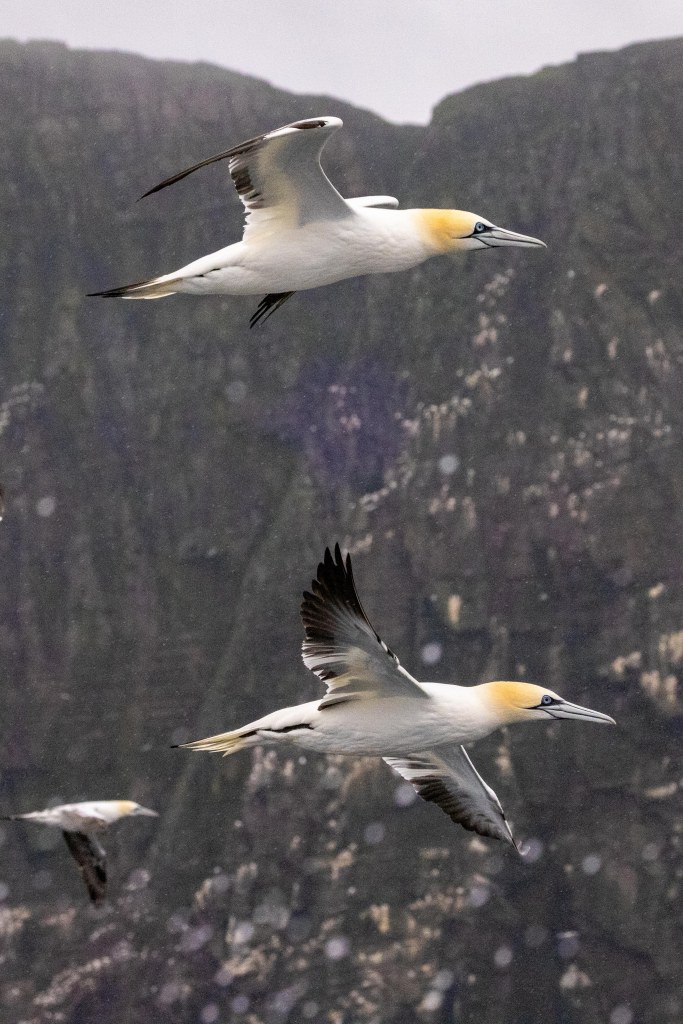
Most prominently were the many thousand Gannets.
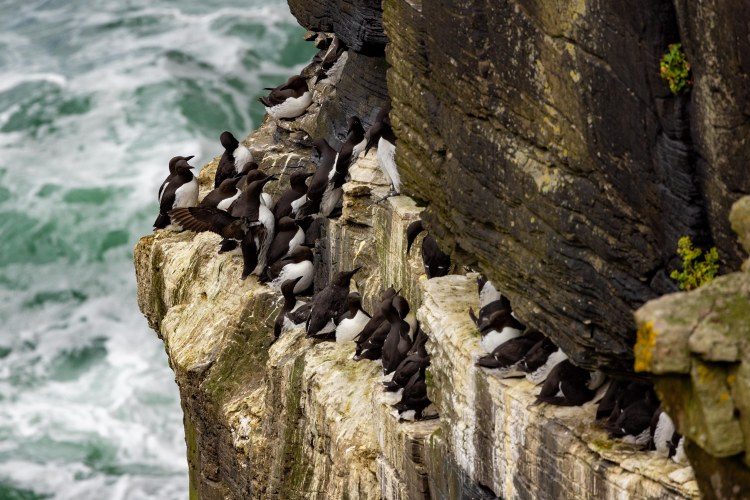
Lower down we could also see the tight lines of Guillemots.
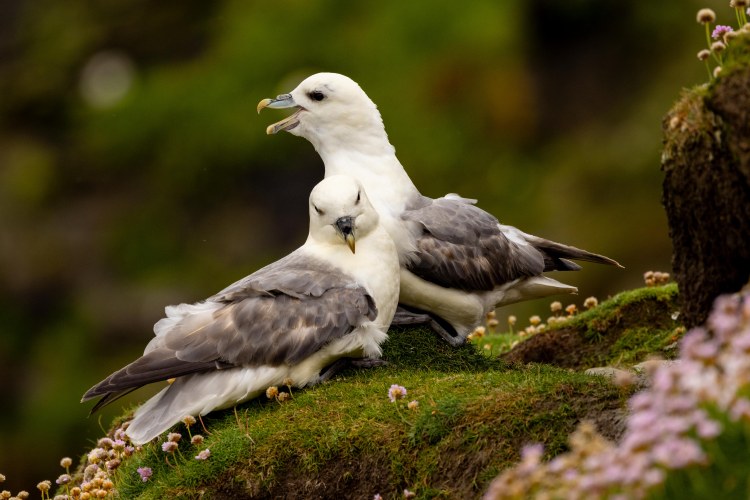
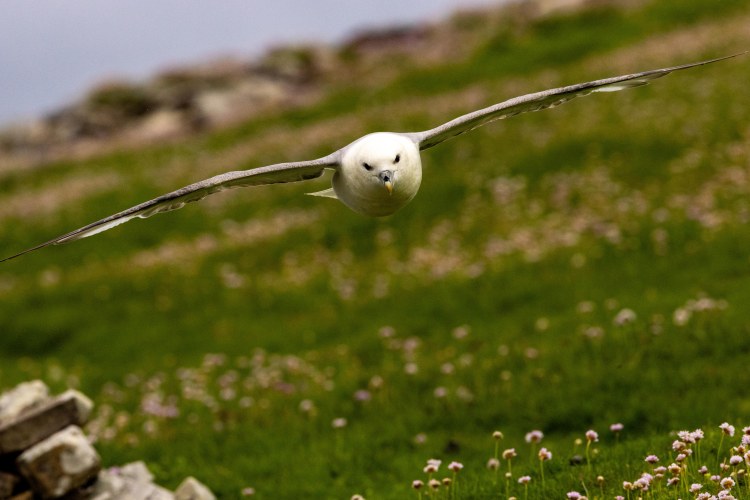
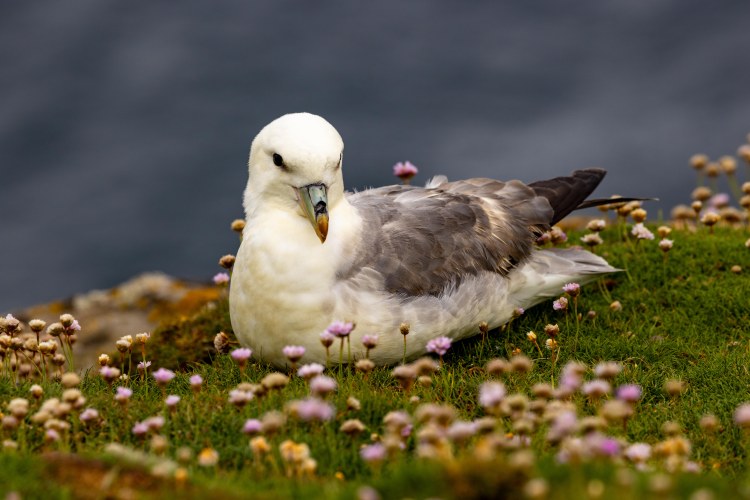
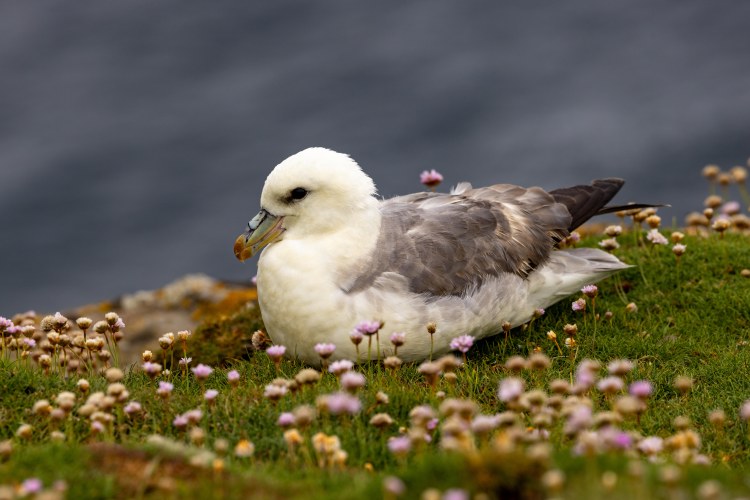
Several Fulmars were either nesting, resting or flying past too
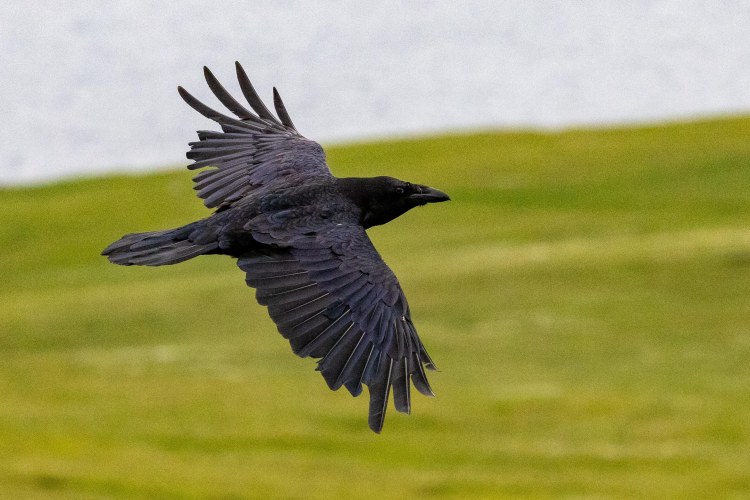
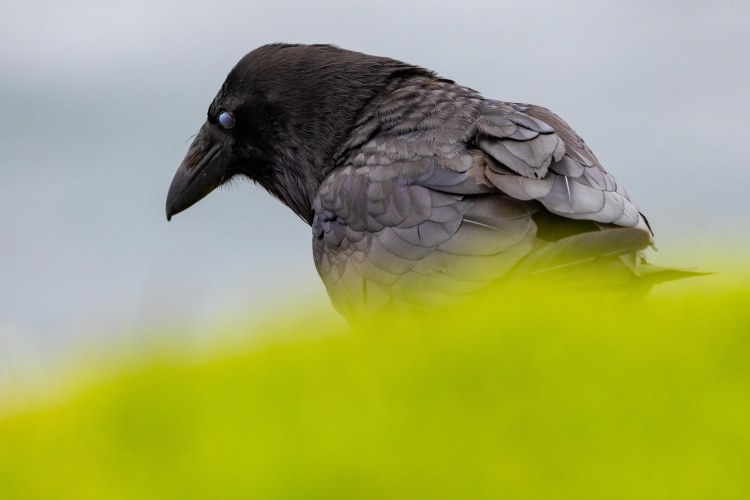
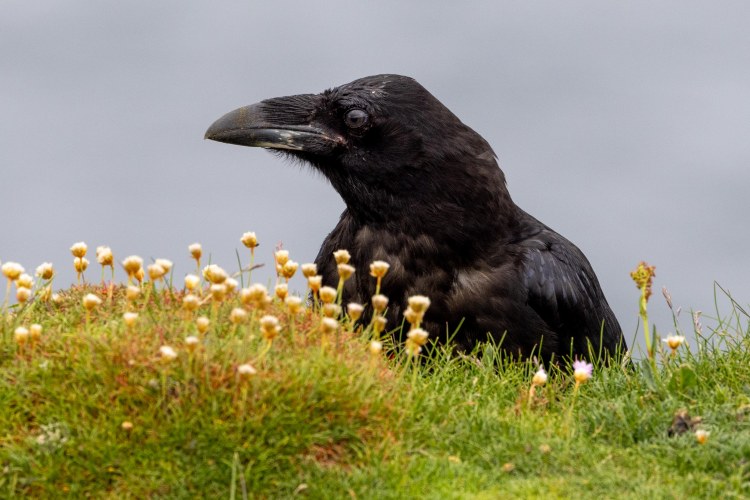
A couple of Ravens were making a living and nest here, one in particular allowing particularly close views.
It seemed most of the Puffins were either deep in their burrows or out at sea but we did see a few on ledges below.
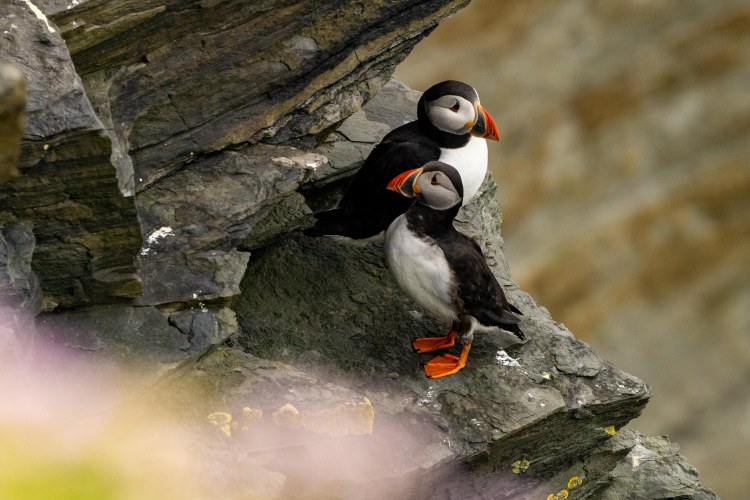
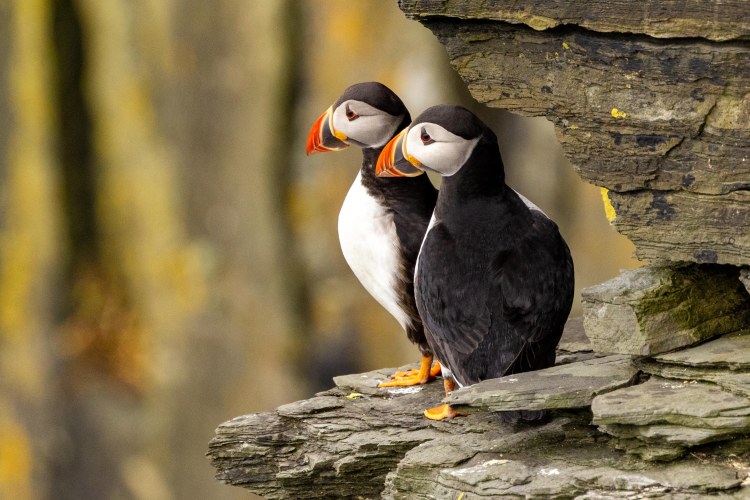
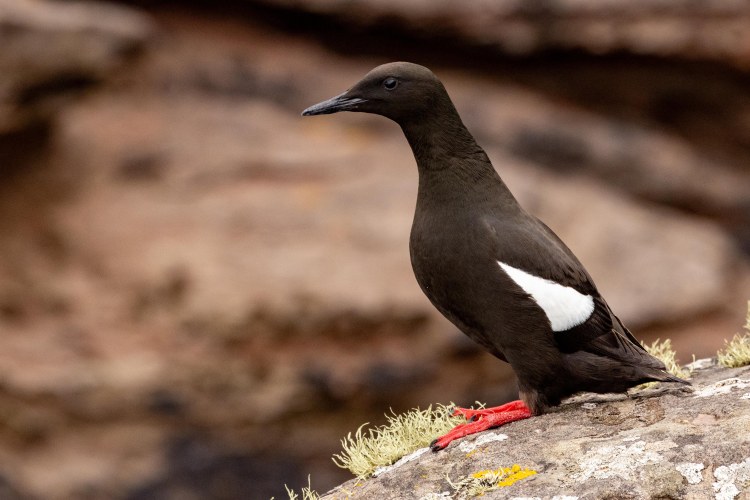
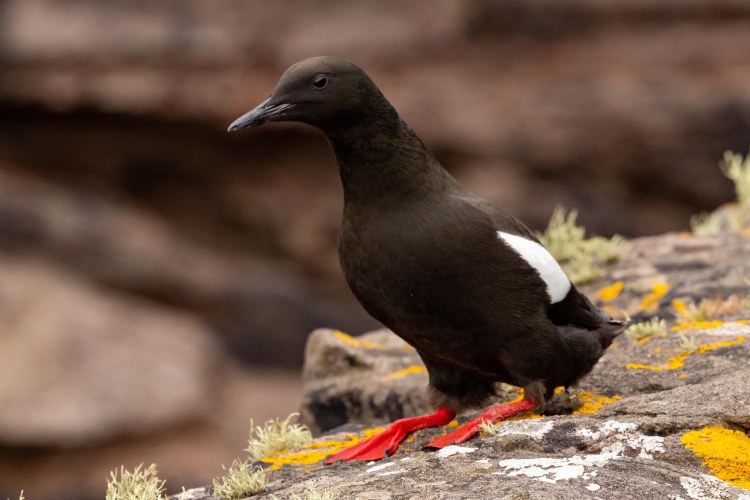
We continued around the Island gradually getting to lower cliffs where Black Guillemots with their impossibly red feet were showing well.
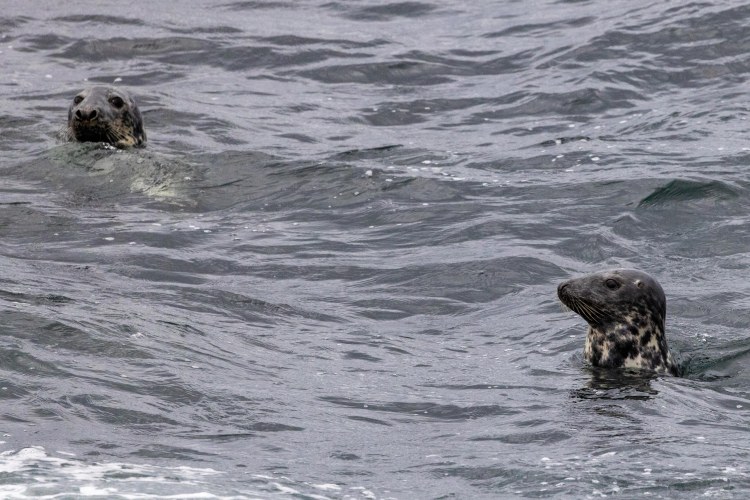
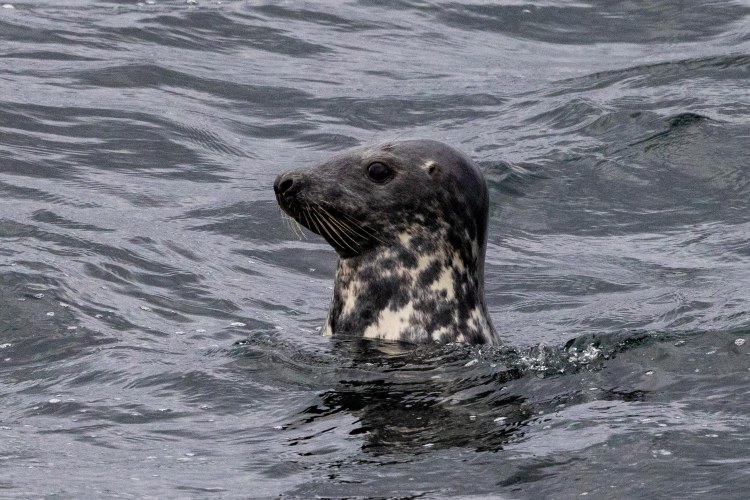
Throughout the walk we were seeing Grey Seals out at sea and here a couple provided closer views (and photos).
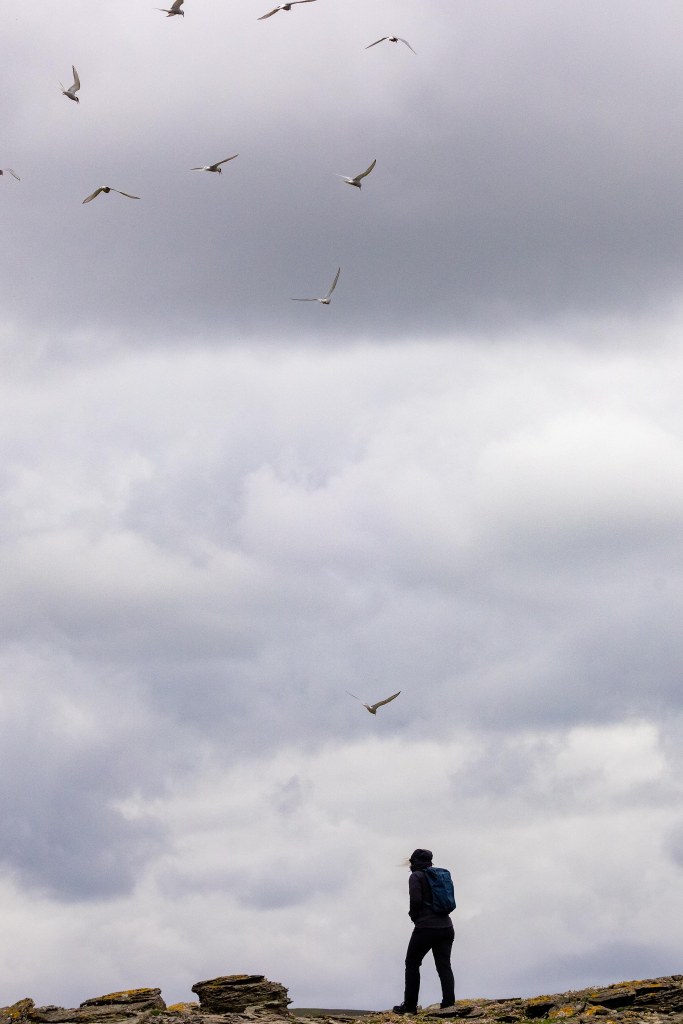
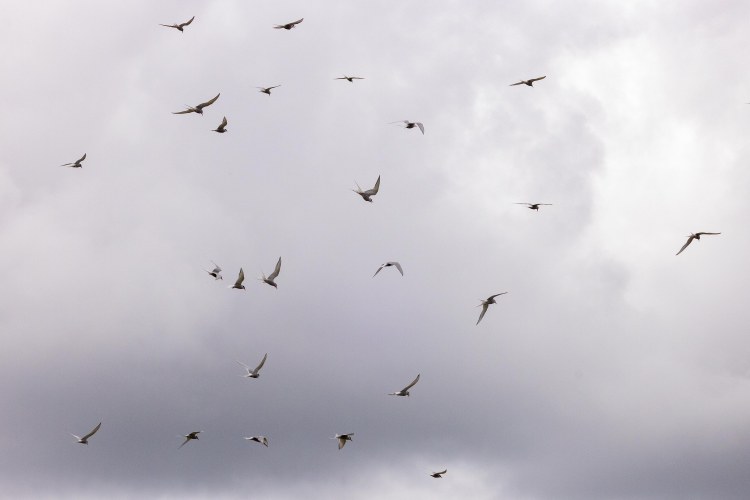
A bit later as we nearly completed our journey back to the start we had to pass through an Artic Tern colony taking care to avoid the chicks, eggs and protesting adults by sticking to the coast.
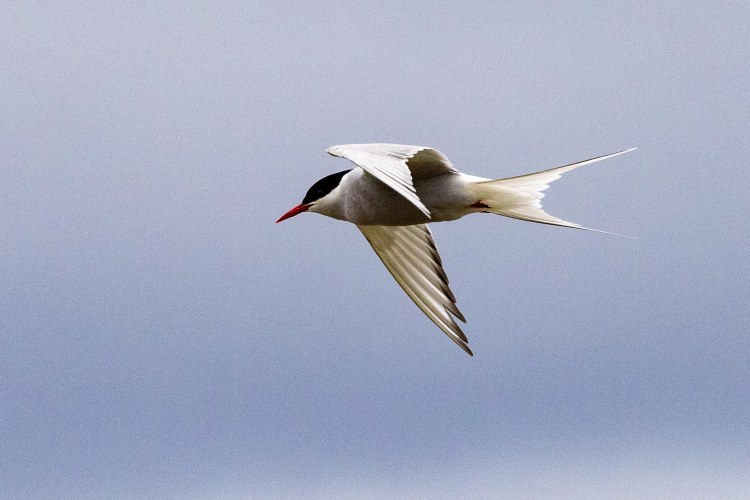
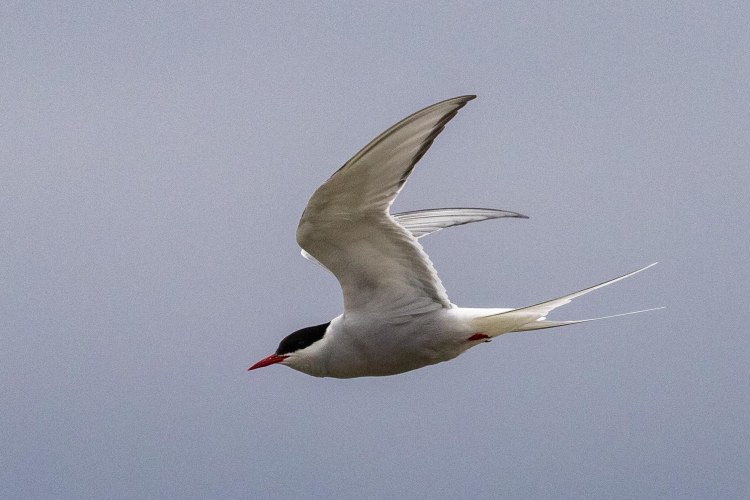
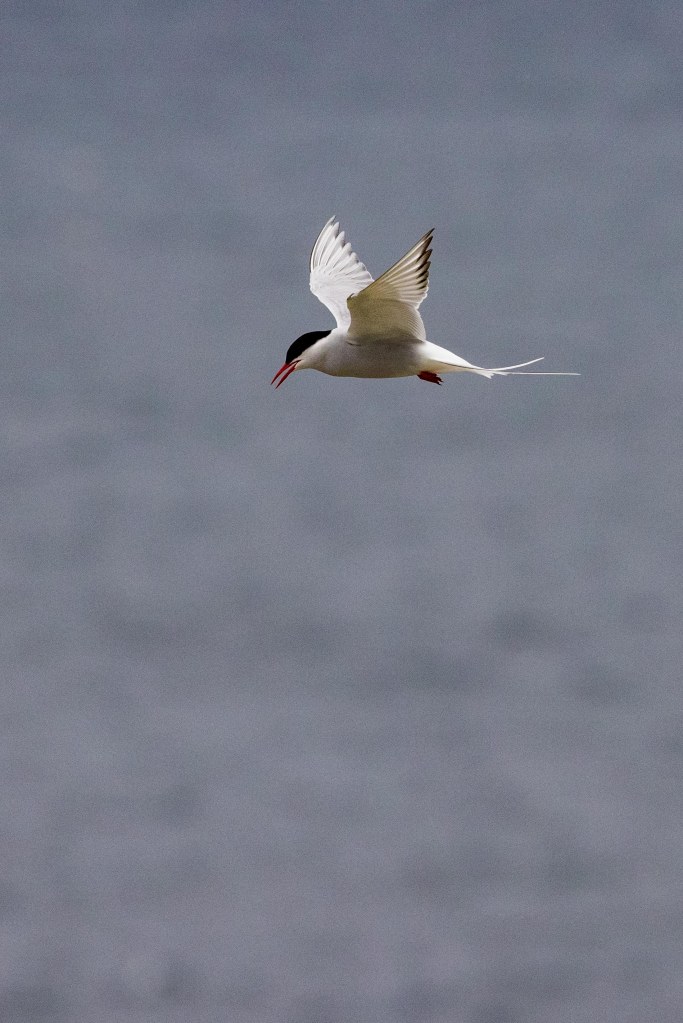
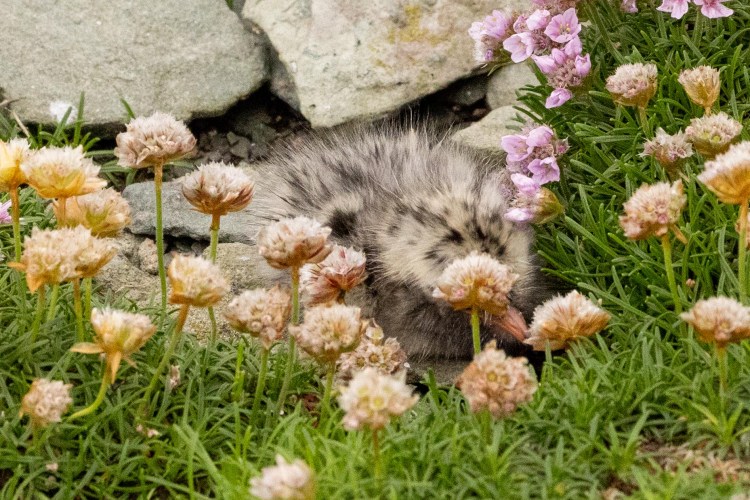
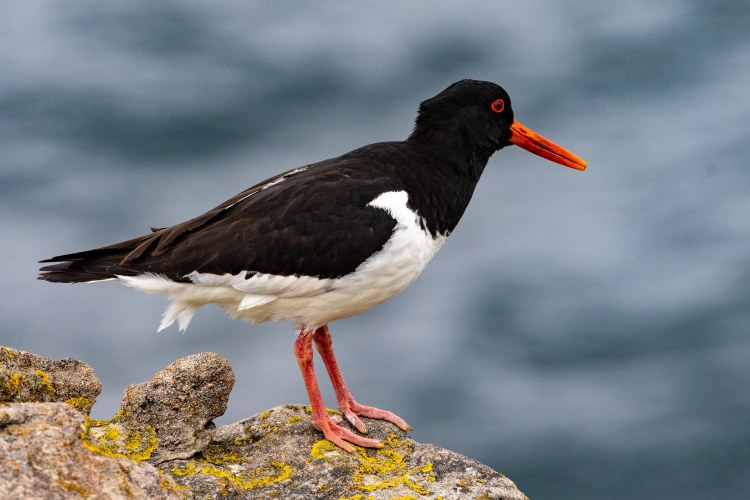
We were starting to learn a rule for Shetland, if you are ever in the countryside and there is an ongoing (fairly annoying) bird sound, it is an Oystercatcher. They seemed to be particularly vocal on this part of the walk.
Whilst waiting for our boat to take us back to Bressay we spotted a young Common Seal Pup with its mother in the water. The warden informed us it was only 2 days old. They are able to enter the water within hours of birth.

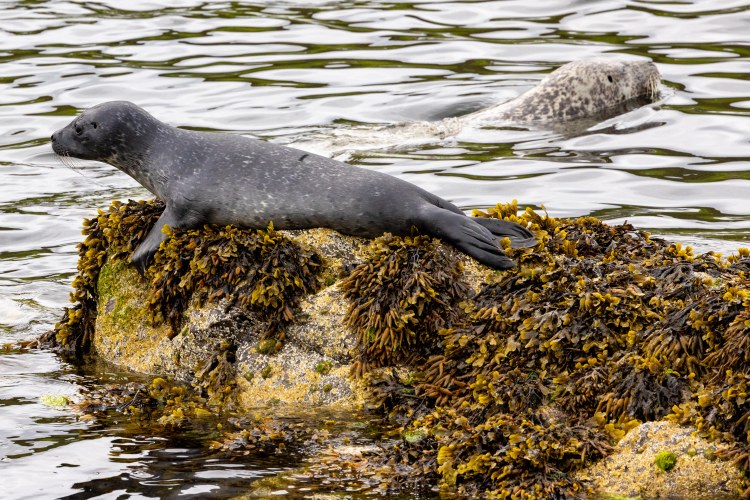
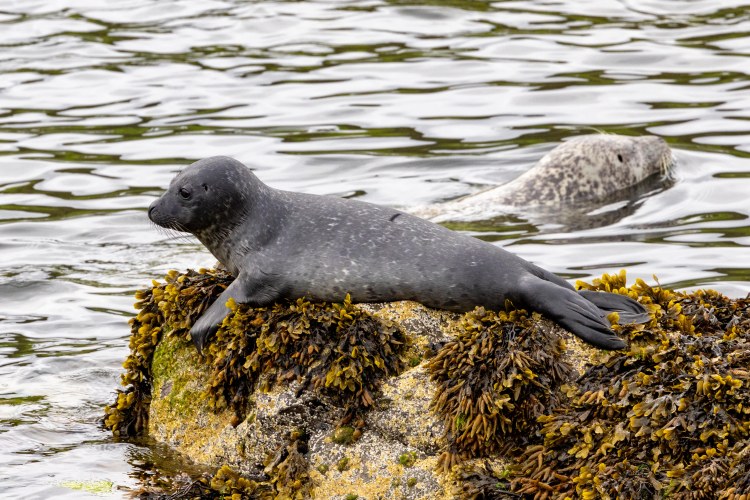
A great way to finish our walk. We had taken about 5 hours but you could do it is much less if you weren’t stopping for views, photos and picnics. But then why would you want to do that?
From Below
A few days later and we had booked a two and a half hour boat trip with Shetland Seabird Tours. In peak season these trips sell out so you have to book a few weeks in advance. And this creates an inevitable lottery regarding the weather. We didn’t win at this one as it was raining heavily throughout and the light for photos was terrible. Despite the obvious challenge this presented in general and for photography in particular it was a great trip.
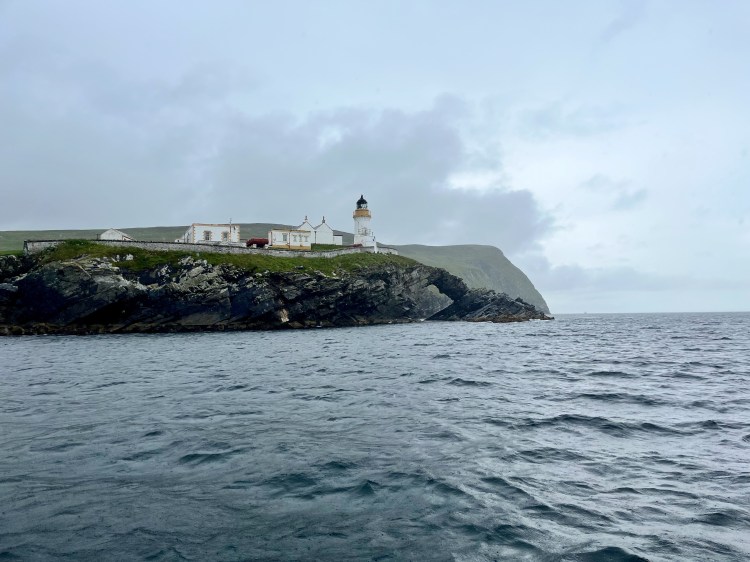
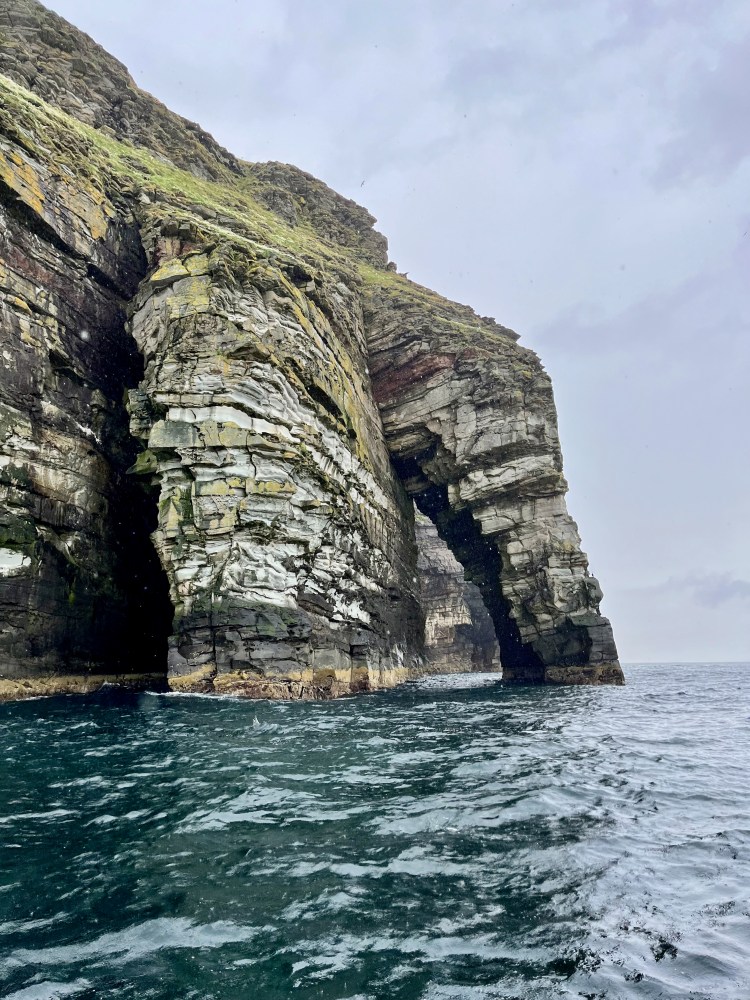
First up we visited some of the scenic points on Southern Bressay.
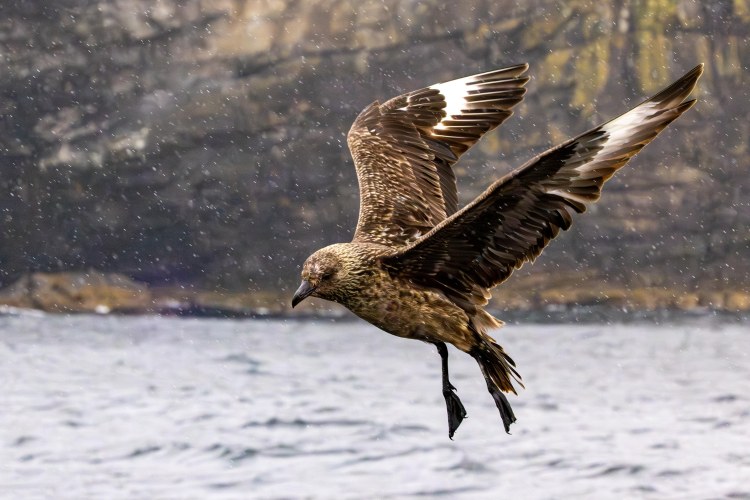
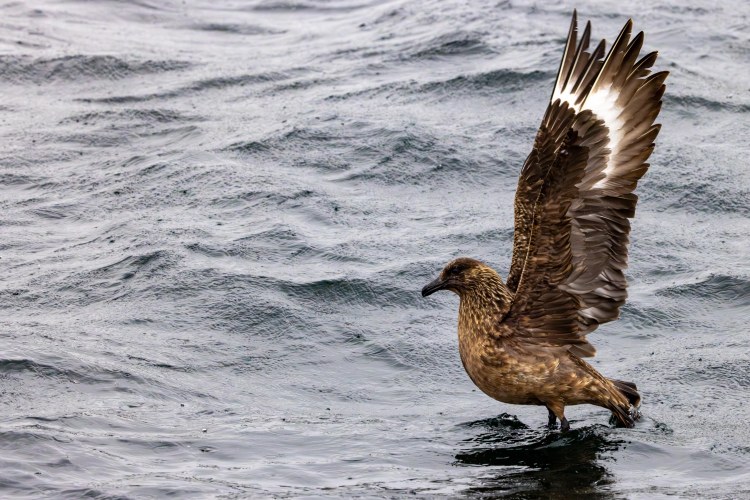
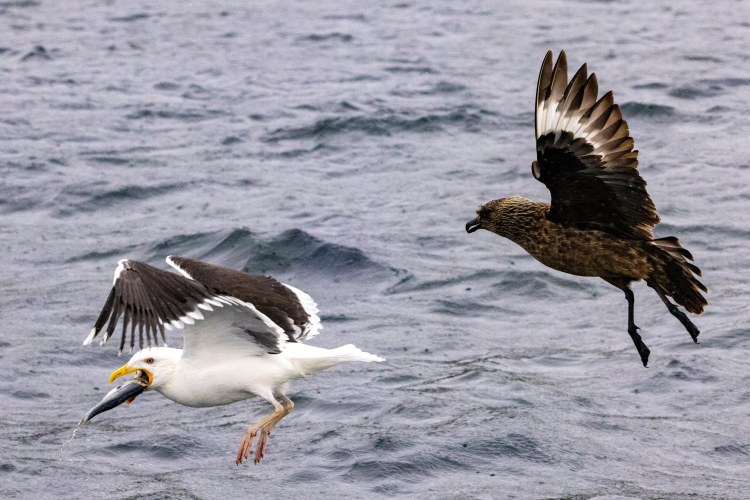
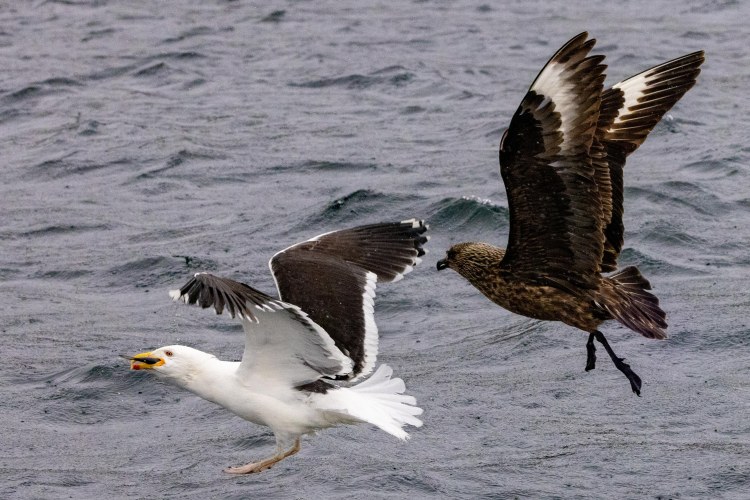
A few birds were on display too in particular Great Skua hoping for an easy feed from the skipper which was provided in the form of some fish he had for such an occasion. Soon Gulls joined in and they had to eat quickly to avoid the Skua giving them too hard a time.
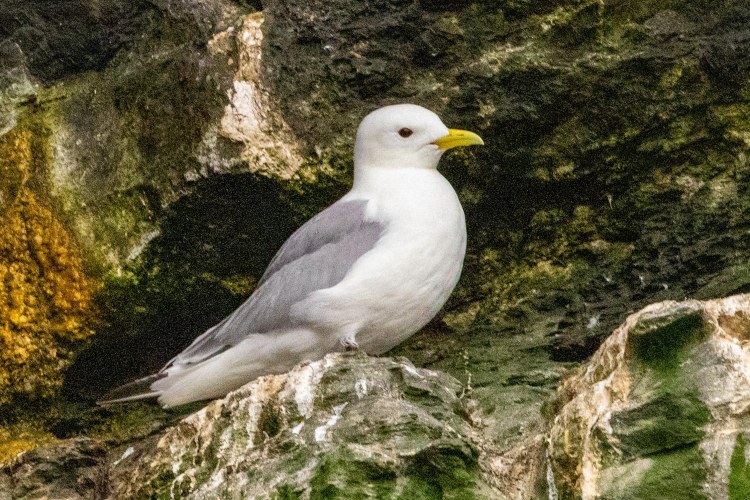
We saw a small colony of Kittiwake, sadly hugely down on previous numbers due to overfishing in the area.
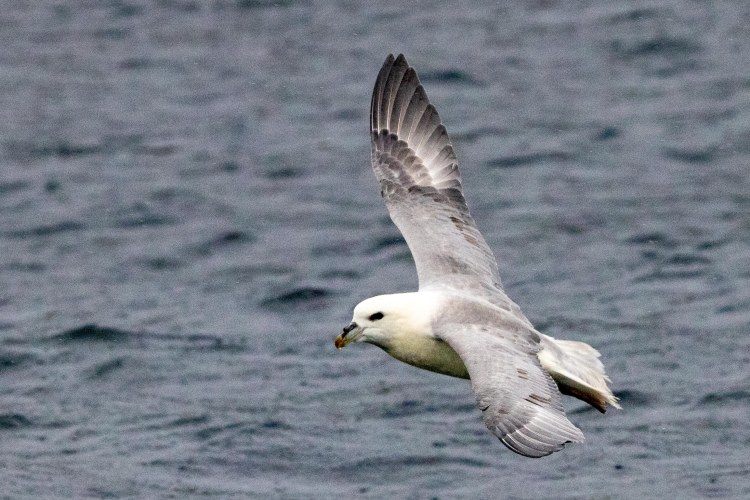
Fulmars were also constantly flying past.
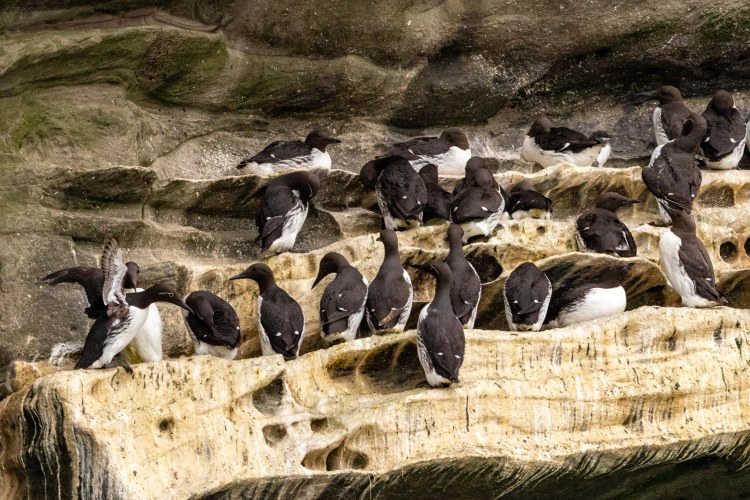
Before long we had arrived at the cliffs of Noss which we had stood atop of a few days previously. Now the Guillemots were closest on the lowest tiers.
But it was still the Gannets that took pride of place and dominated the scene. As well as the thousands of breeding birds it was possible to make out distinctive areas of non-breeding rocks where sub-adults were socialising and potentially pairing up for future years.
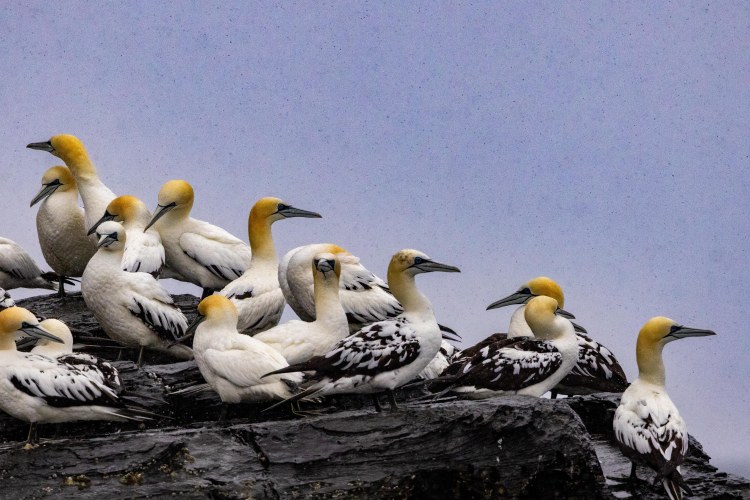
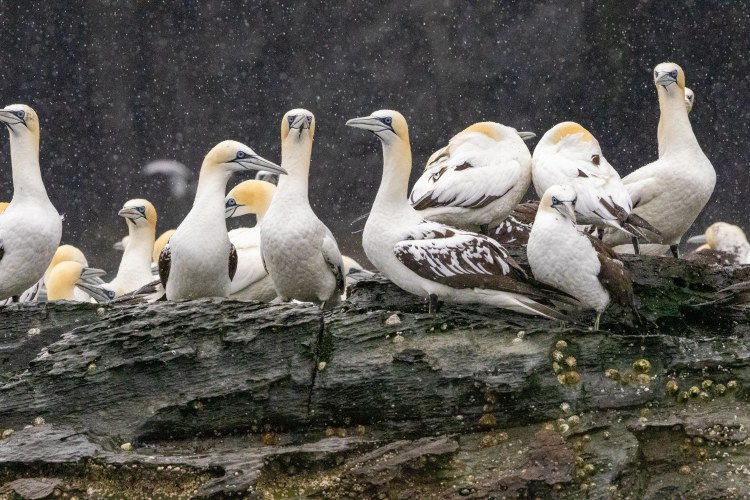
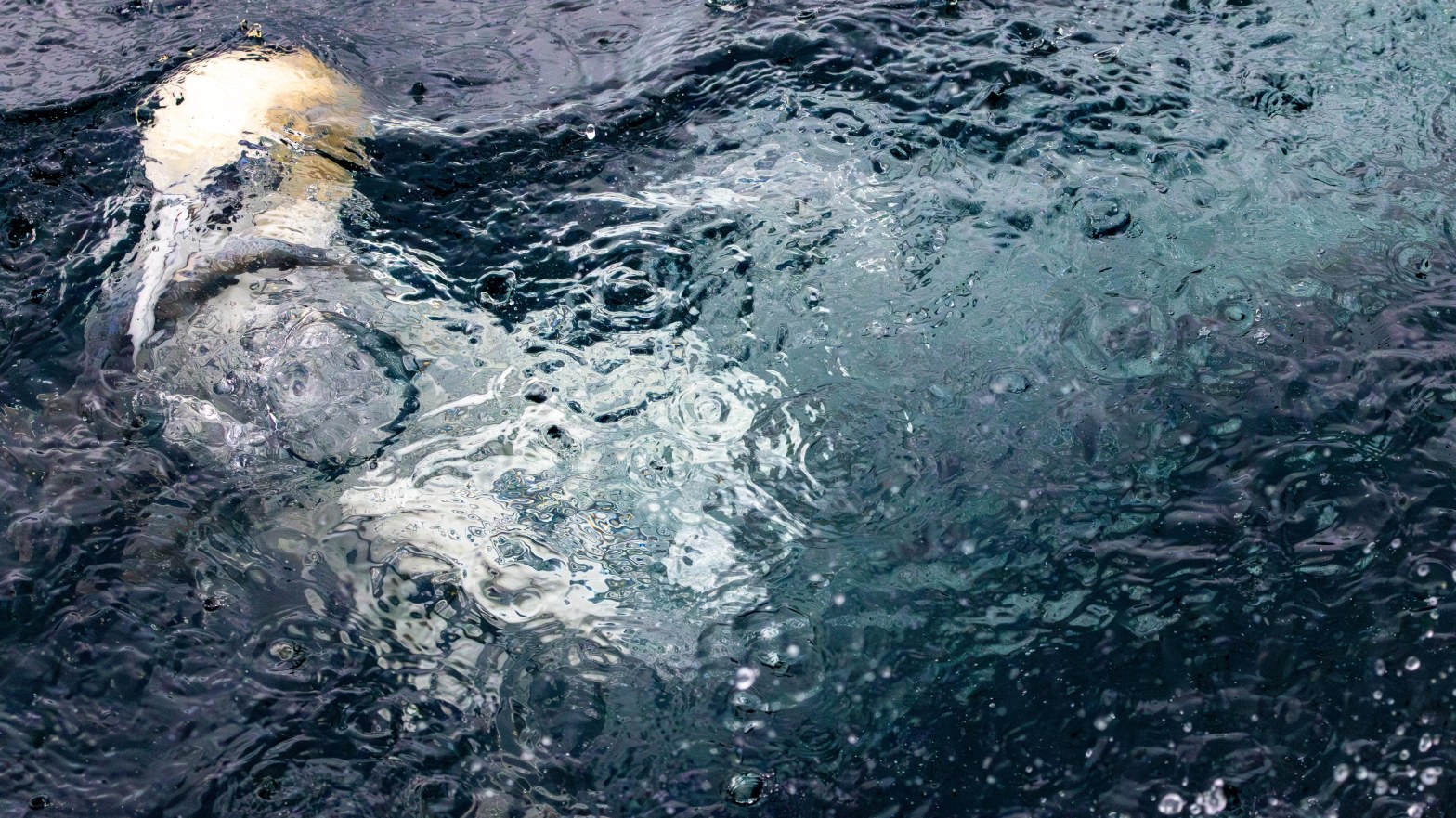
What followed was what set this boat trip apart in terms of sheer spectacle. Moving away from the cliff the skipper put several fish overside and before long Gannets were everywhere diving for an easy meal. This was an amazing experience and even worth getting soaked to the skin for.
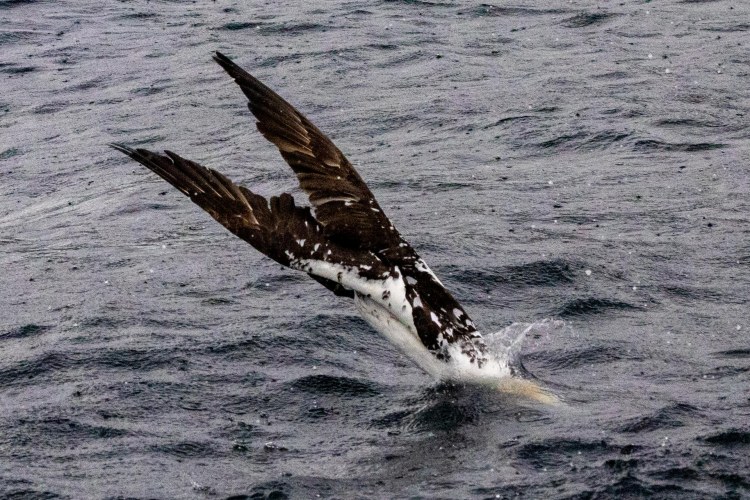
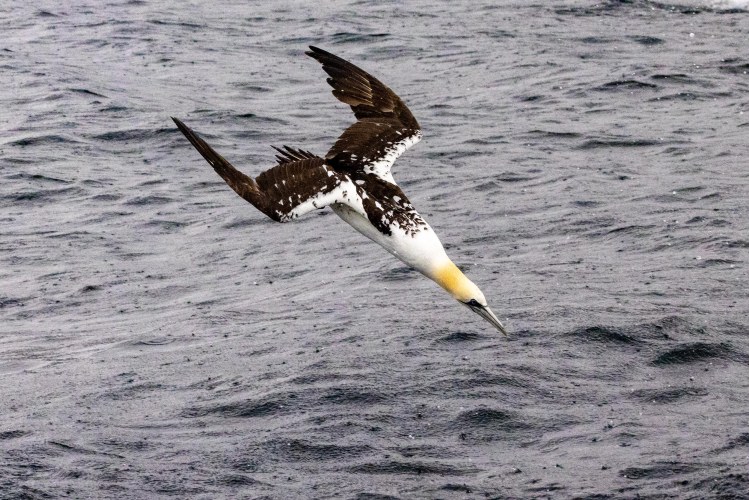
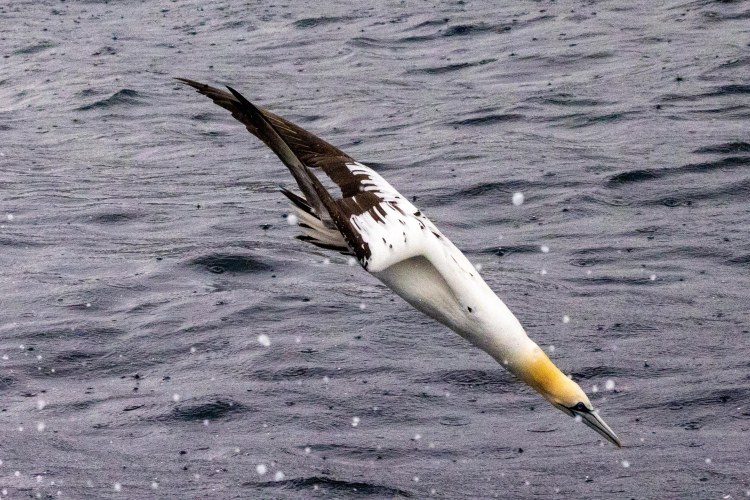
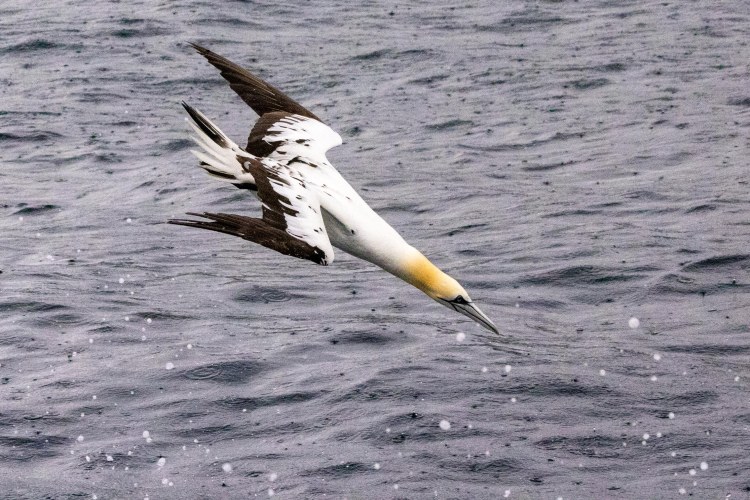
The lighting streaks underwater were hard to capture but on fast burst it was possible to get lucky, I particularly love the shot of the Gannets rising to the surface.
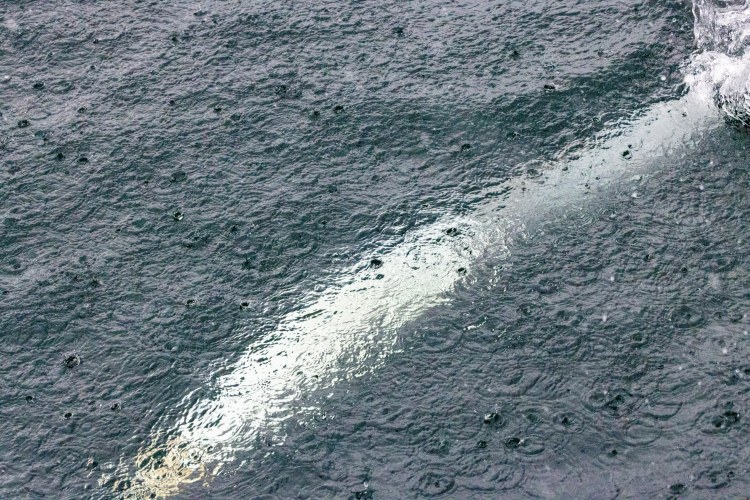
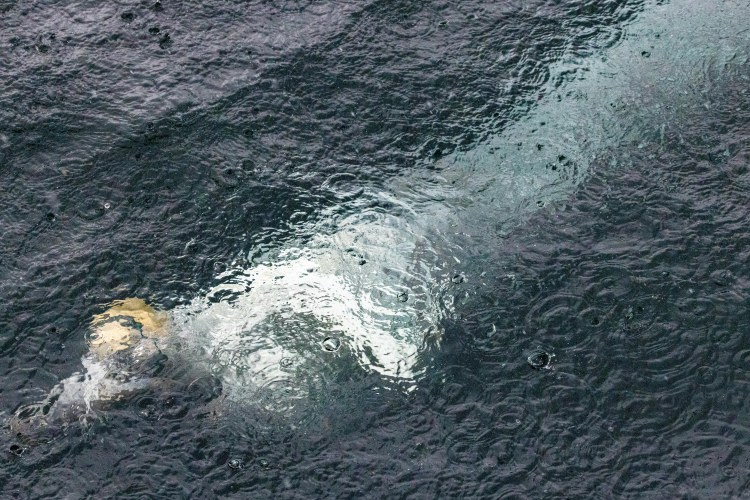
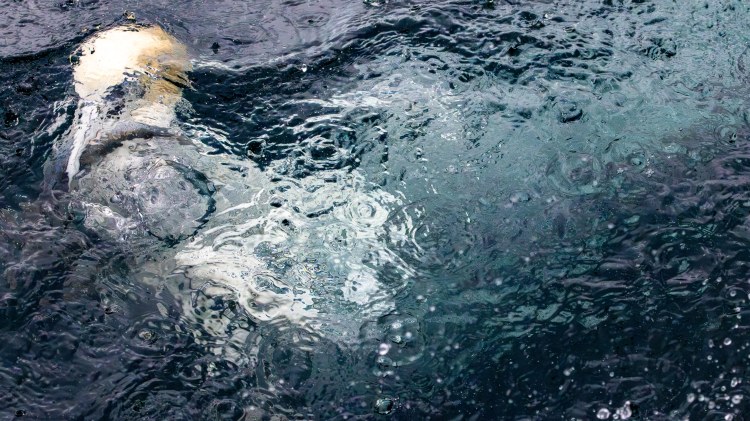
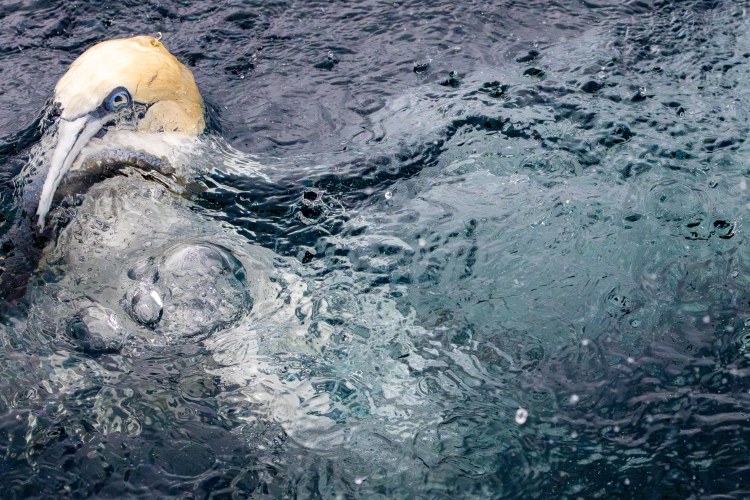
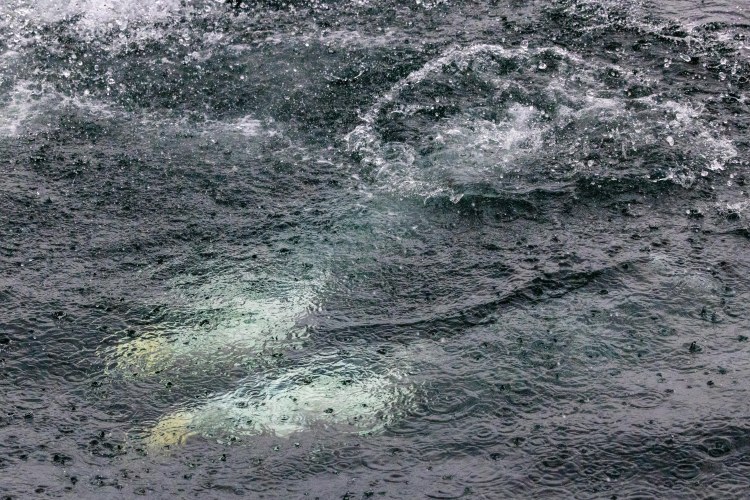
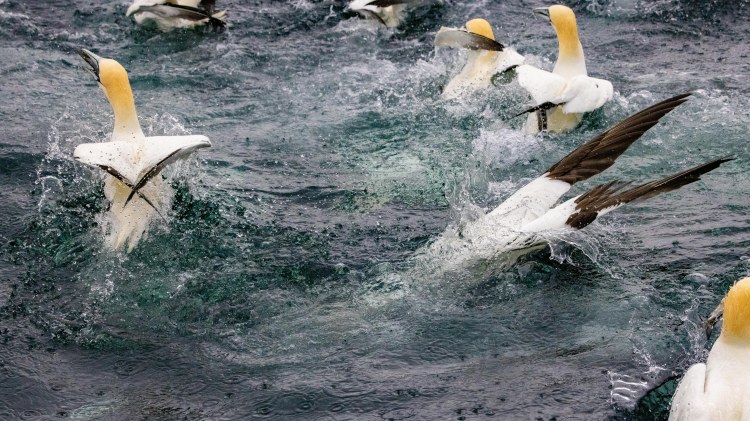
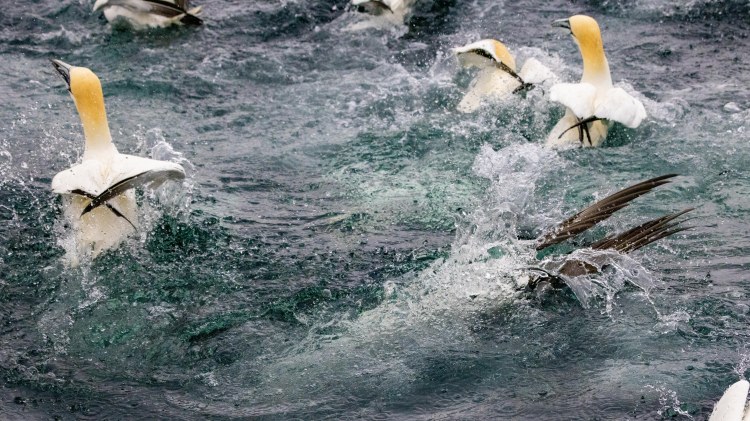
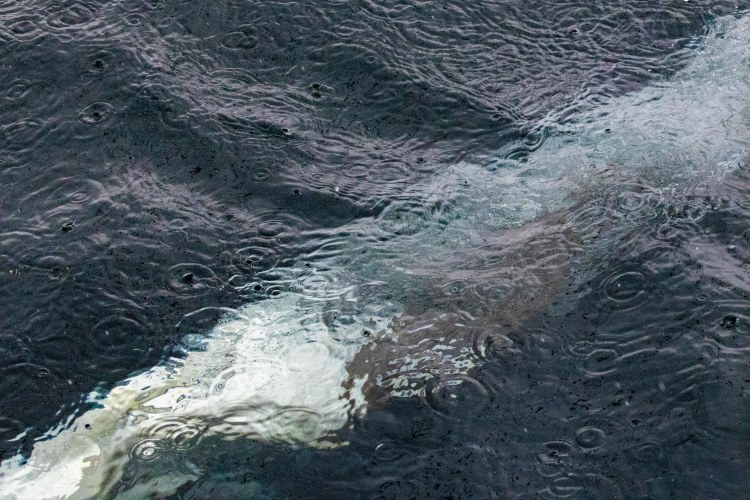
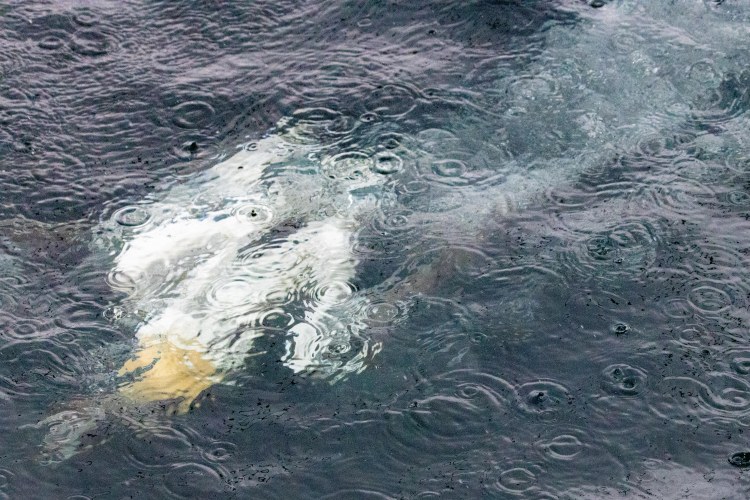
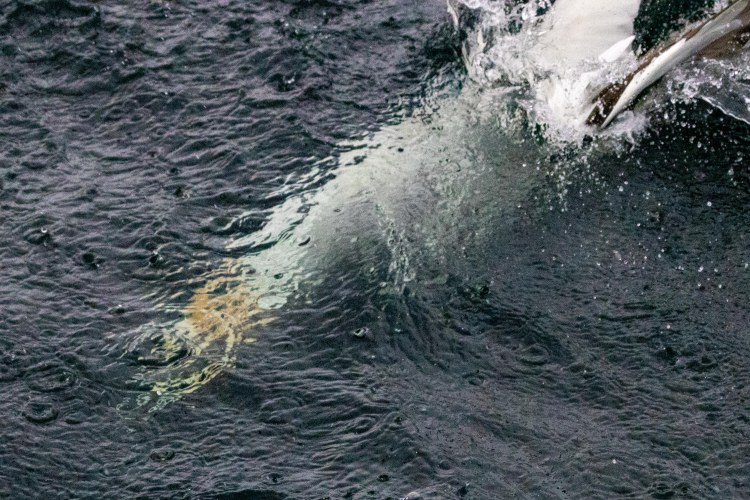
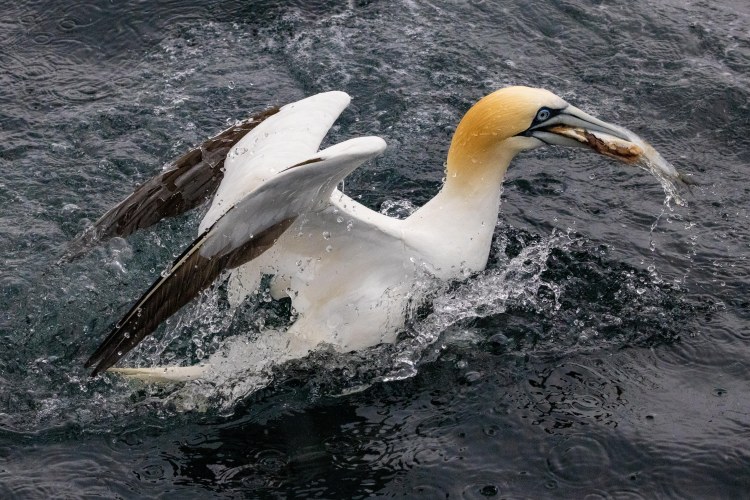
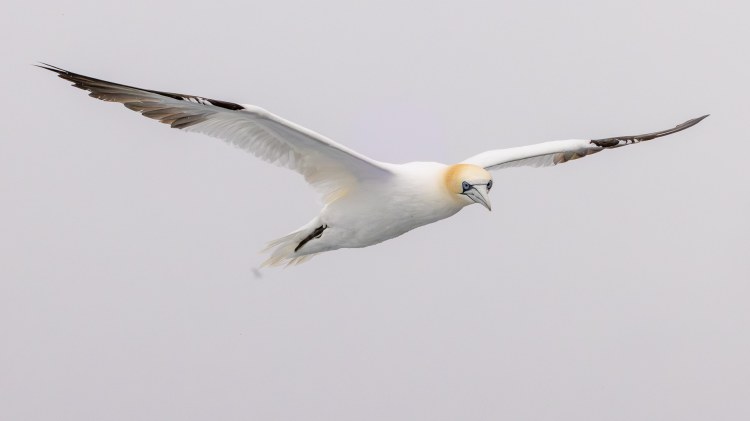
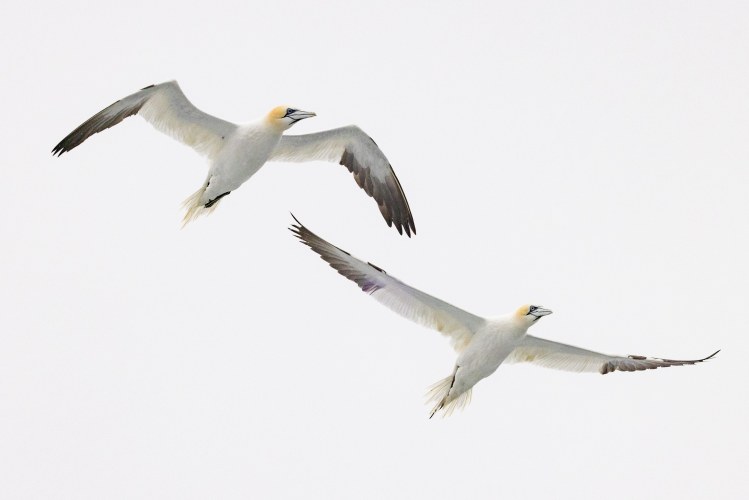
Before long we were being followed by hundreds of Gannets.
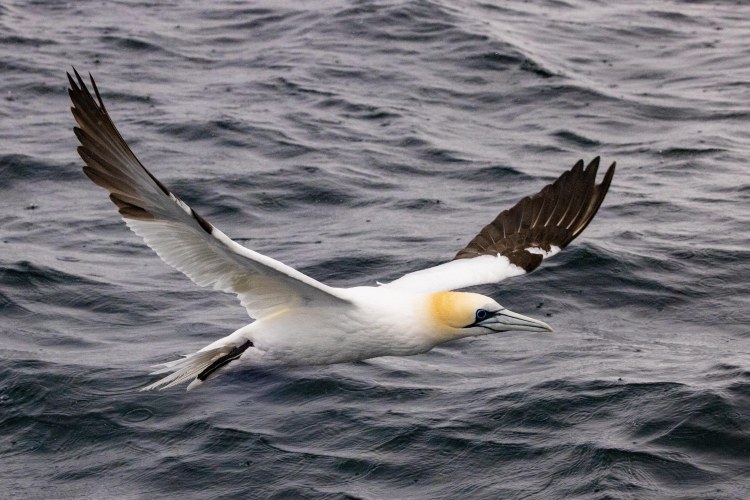
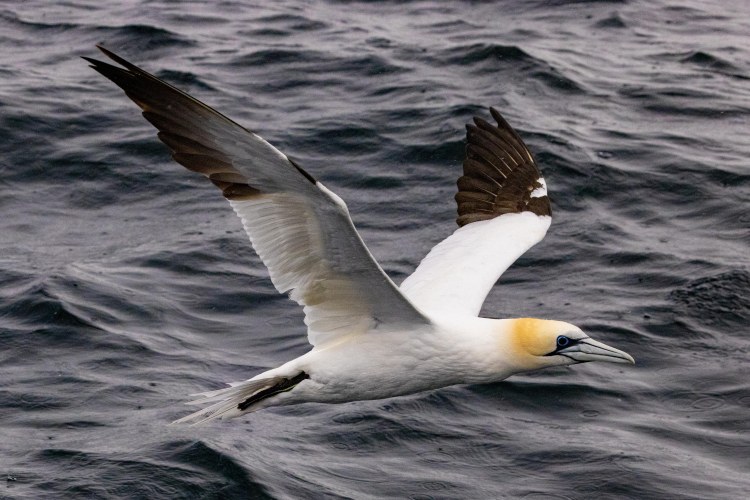
I had noticed several Gannets had the peculiar black eye which has been shown to indicate they have survived bird flu.
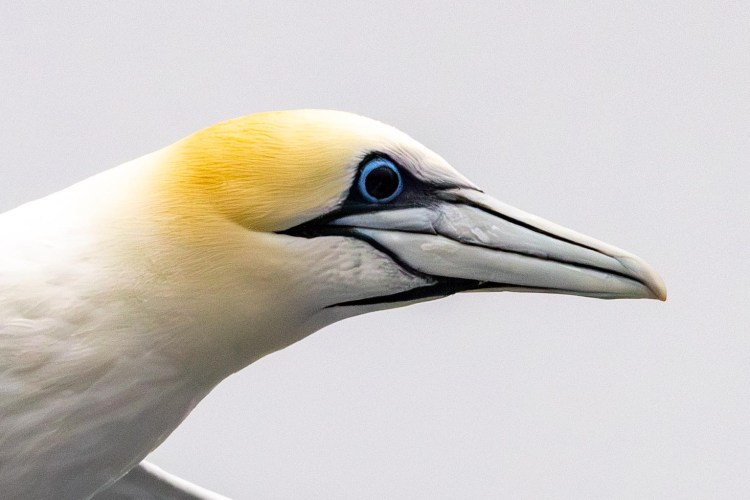
With so many Gannets following the boat I took a few high key (over-exposed) shots.
If you only have a few hours take the boat trip (ideally when it isn’t raining but even if it is!). But if you can spare the time visit the Island and walk the cliffs too.
 WildScot Photography
One thought on “Noss from above and below – Shetland Wildlife Part 4”