Having birded for two days in the Andes and Cloud forest we continued our birding adventure with the excellent Wild Watch Peru by descending into the bamboo and foothill rain forest around Manu Road.
We stopped on the road at Conta Chaca as we descended and were pleased to see our first Macaws flying over (Blue-Headed and Chestnut-Fronted). Easy photos were offered by Pale-Vented Pigeon, Spectacled Chachalaca and more interestingly three lifers, Bluish-Fronted Jacamar, Yellow-Breasted Warbling Antbird and the endemic Black-Backed Tody-Flycatcher.


We continued down the road and stopped at Bambu Lodge. Here we added a new lifer in Mottle-Backed Elaenia and saw a distant Violaceous Jay too. Various Tanagers visited the feeder too.


Our accommodation for the next two nights was at Guadalupe Lodge and on the way we stopped at some marsh and ponds. Here several Hoatzin and Speckled Chachalaca offered good views. We also saw more distant views of Little and Yellow-Tufted Woodpeckers. We also heard but sadly didn’t see a Sun Bittern.


After settling into our accommodation our hard-working guide Simon suggested we pop out once more before sunset. We are very glad we accepted this suggestion as we saw so many birds in this dusk period. I left the camera due to the failing light, but we added lifers in Military Macaw and Spix’s Guan.
The next morning we were up birding before breakfast and in one hour saw 43 species. The lifers came quick and fast. Two Brazillian Teal flew up the river. A White-Bearded Hermit flew about a flowery bush. A Blue-Crowned Trogan called from a nearby tree. A Crimson-Crested Woodpecker drummed at a nearby tree before flying across the valley. Blue-and-Yellow Macaws and White-Eyed Parakeets flew from roosting sites. Riparian Antbird and Chestnut-Crowned Foliage-Gleaners offered quick views from nearby bushes. Simon managed to scope a Plum-Throated Cotinga whilst a Little Ground-Tyrant picked along the path in front of us. Altogether we added 14 lifers in less than one hour!
After breakfast we headed into the Bamboo forest above the lodge. The light remained poor so again I left my camera. But again in a 90 minute walk we added 11 lifers from 14 species spotted – three Antshrikes (Bamboo, Plain-Winged and Bluish Slate), three Antbirds (Chestbnut-Tailed, White-Lined and White-Browed), Ornate Stipplethroat, Peruvian Recurvebill, Flammulated Pygmy-Tyrant, Large-Headed Flatbill and Cuzco Warbler. This period was a real example of the value of a local guide – I probably would only have added the warbler without their help.
After a snack at the lodge we headed out again and added Black-Eared Fairy, Western Stiolated Puffbird (see photo below), Black Antbird, Black-Spotted Bare-Eye, Ochre-Throated Foliage-Gleaner, Moustached Wren and Oleaginous Hemispingus (see photo).


The morning had been amazing birding. But the light had been poor so it hadn’t been great for photography. Things were about to change as we visited Pico de Hoz feeders.
Altogether we saw 13 species of hummingbirds at the hummingbird feeders, of which 11 were lifers. Words won’t add much to the photos below but wonderful, wonderful birds!


A Russet-Backed Oropendola visited the fruit-trees whilst a Turquoise Tanager ate berries from a nearby bush. Seed scatted on the ground attracted two new birds for me Grey-Fronted Dove and the striking Red-Capped Cardinal.


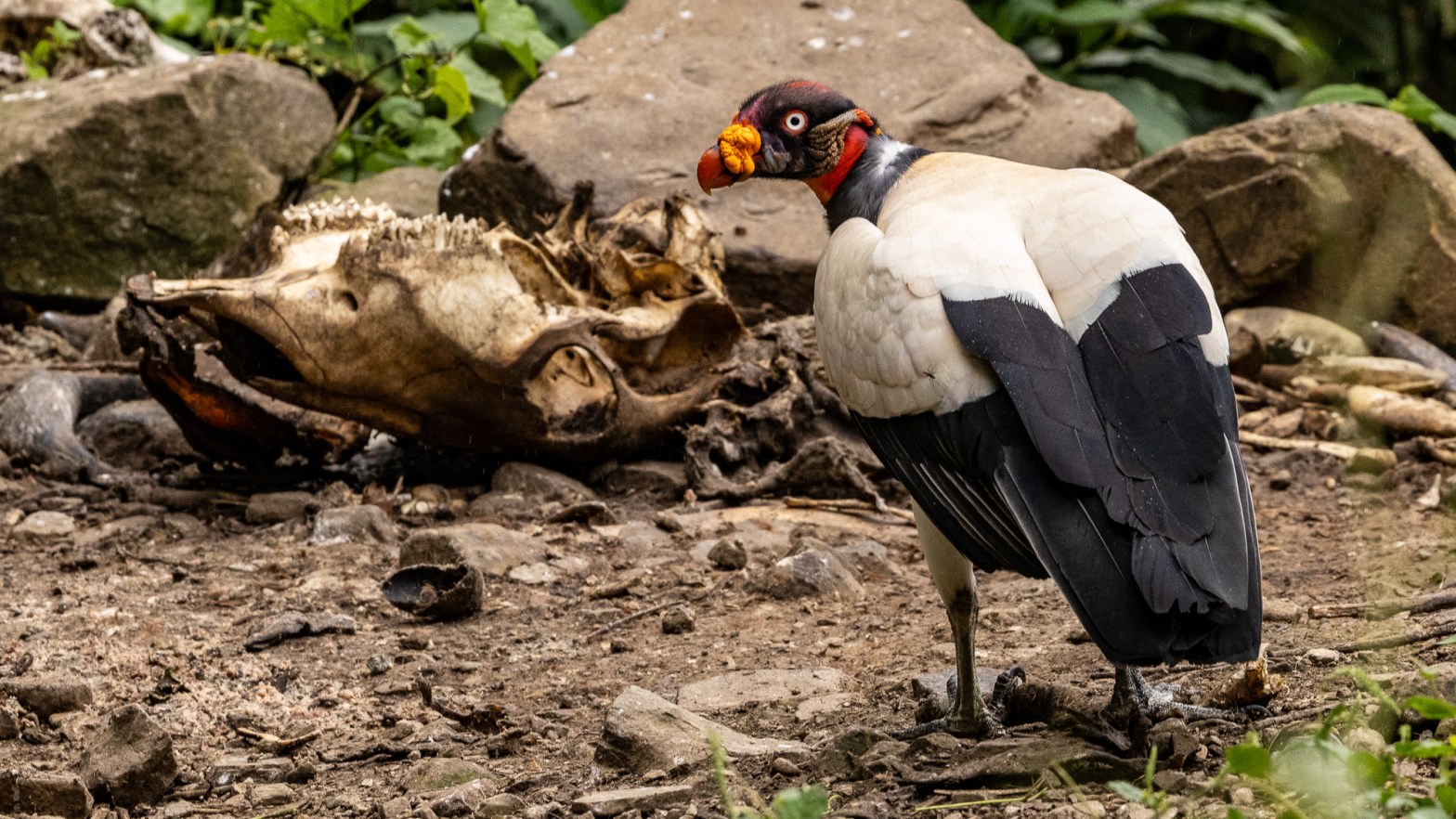
Moving on from the garden we were driving along the road when we noticed several vultures circling above. Stopping the car we were delighted to see three King Vultures and a couple of Greater Yellow-Headed Vultures among them. Simon tracked them until they landed and we went to have a closer look. I was delighted with the photographic opportunities these birds presented.


We continued to Jardin de Picaflores where a few more delightful birds offered photographic opportunities.


On the drive back to the lodge our wonderful guide spotted not one but two separate perched Great Potoos. A wonderfully camouflaged bird which was great to see.


Our final morning was spent with Luis. Again the light was poor and I left my camera. The forest was very cloudy and cold and the birds were slow to get going. However, we had a wonderful encounter with a pair of Band-Bellied Owls who remained quite active flying between three perches. At one point they were mobbed by irate hummingbirds. A wonderful end to our time birding on Manu Road.
Altogether in our 4 days on Manu Road with Wild Watch Peru we had added a very impressive 133 lifers. We added a few more on the Inca Trek which followed taking our Peru total to 313 species of which 203 were lifers! I had also added 88 photo lifers in Peru. You can see more details in our two Peru eBird trip reports – Part 1 and Part 2.

 WildScot Photography
One thought on “Manu Road – Part 2 (Rainforest)”