
So Shetland is remote, you know this because when you look at a map of the UK it is often shown as an insert box. In fact Shetland is closer to Norway than it is to Edinburgh. But if you look at a map of Shetland, you will see that two islands (Foula and Fair Isle) are themselves often relegated to an insert too.

The box around Foula is to indicate that it isn’t just off West Mainland as shown but actually 20 miles off the mainland. Well I fancied a bit of remote and in mapping terms what better way than to visit an insert off an insert!
We booked a day trip with Shetland Sea Adventures, the trip was brought forward a day to make the most of the finer weather – a great decision by the skipper Ali as we had fine conditions on board the Silver Swift.

On the way we scanned for dolphins and whales but not to be on this trip. We saw the usual seabirds including…
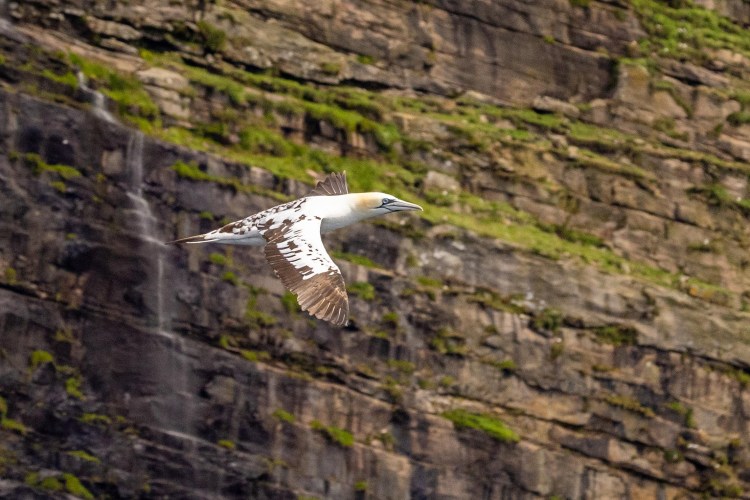
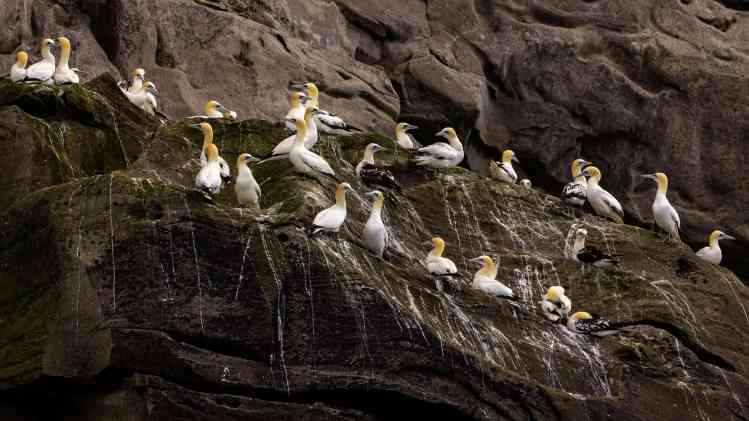
… majestic Gannets of various ages


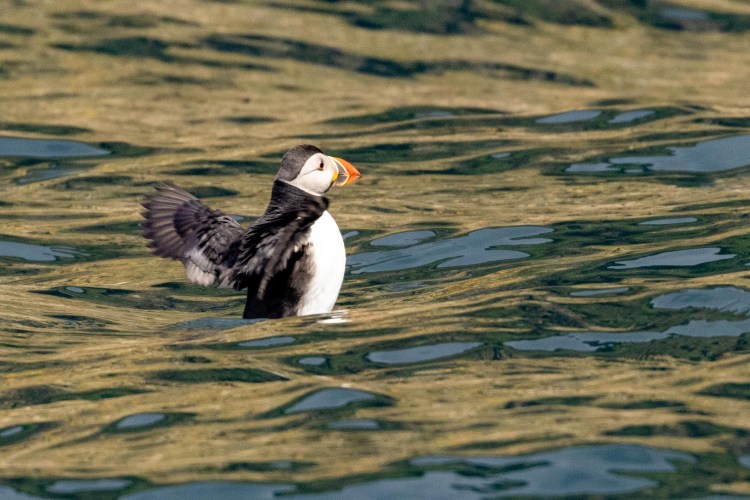
… a few Puffins on the water and in flight

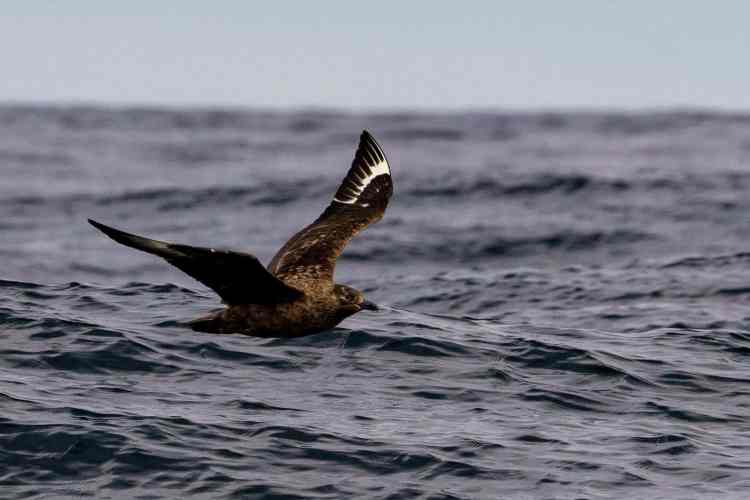
… and several Great Skua’s

After about an hour we pulled up at the quay and picked up a local guide from the island to tell us what we were seeing as we circumnavigated the island.
We spotted two very distant Snow Geese flying which summered on the island last year and have returned this season too.
The cliffs, geology and sights of Foula were incredible. The cliffs are the second highest in the UK (370m/1210ft) after those on St Kilda.


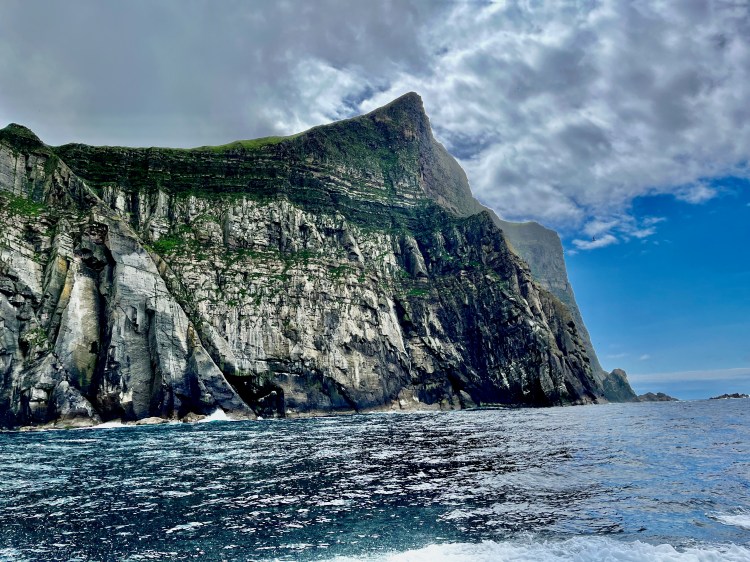
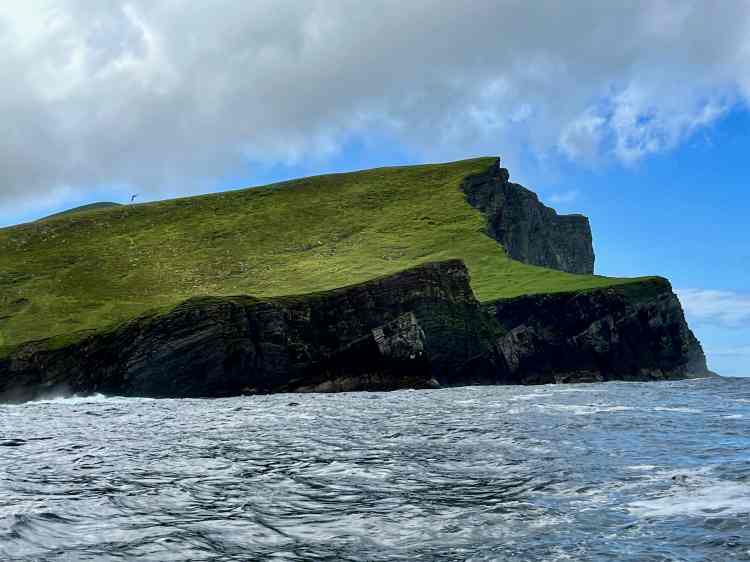
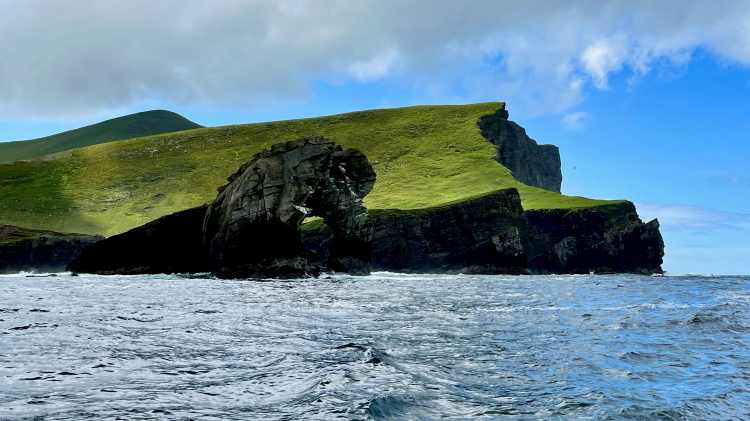

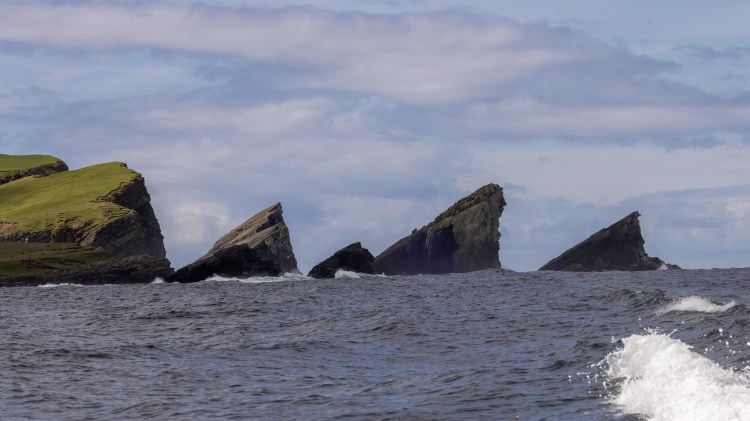
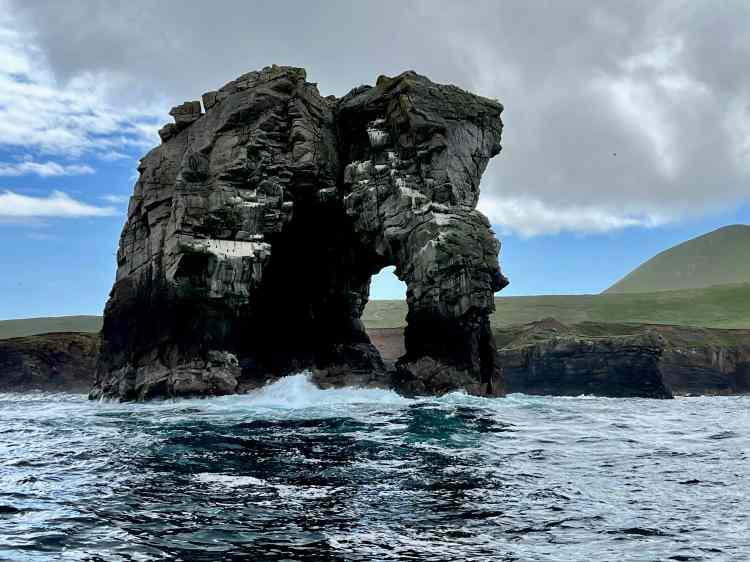
It was fairly rough and with a high tide too (which was covering the buoys marking the local fishermen’s lobster pots) this limited our ability to linger or approach some of the seabird cliffs. But we still got an amazing sense of the grandeur of this remote island.

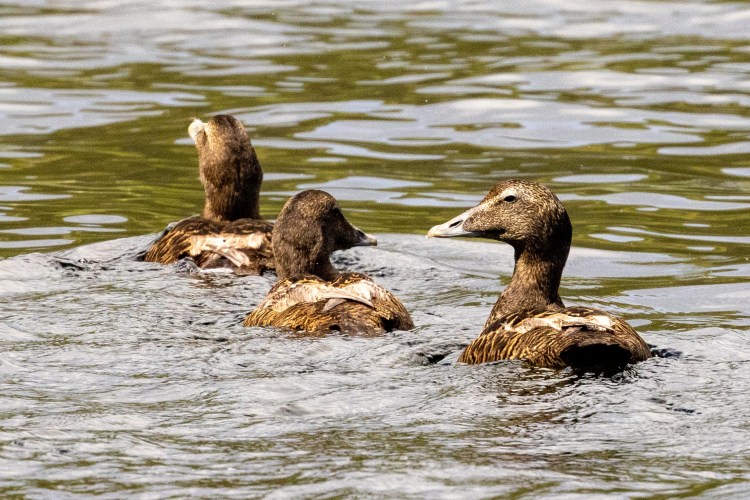
We returned to the small harbour and saw several Eider Ducks on the rocks and in the water.

Once on shore we were warmly greeted by several islanders including Fran from the Ranger service who gave us maps of the island and advised us on walks. Some of our fellow passengers opted for the free guided walk.
A local showed us what he called a “Garden Crab” because it was covered with vegetation for camouflage.

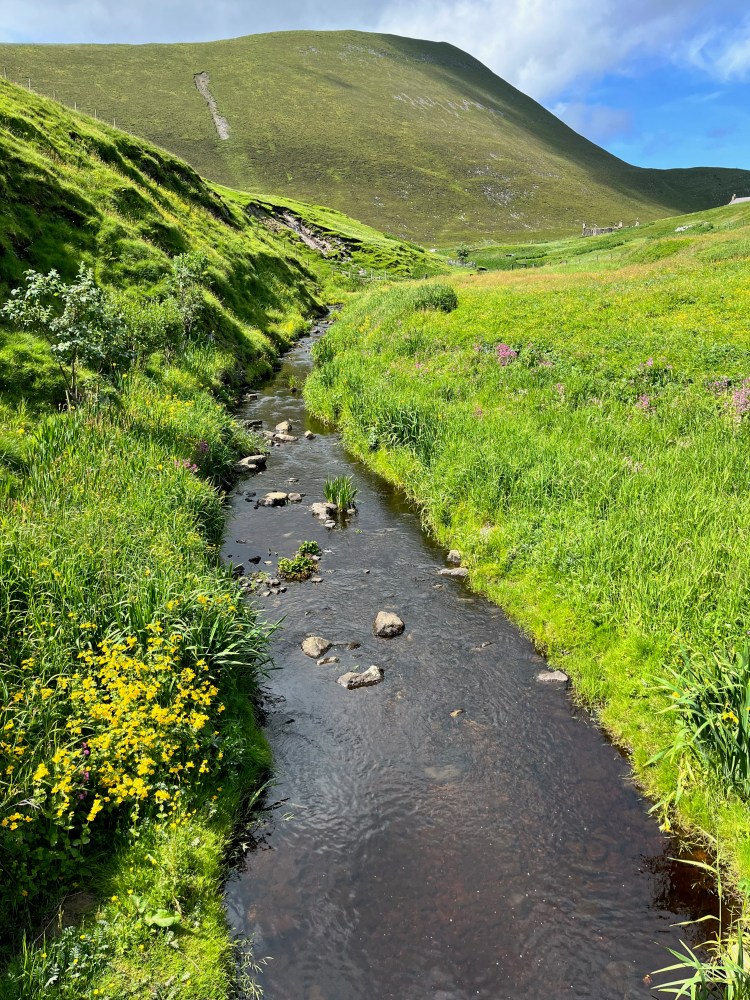
We walked up the beautiful stream from the harbour and found a place for some lunch.
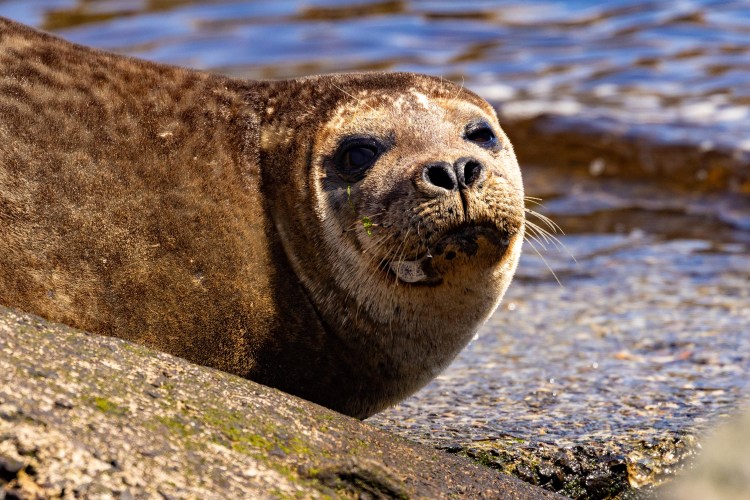
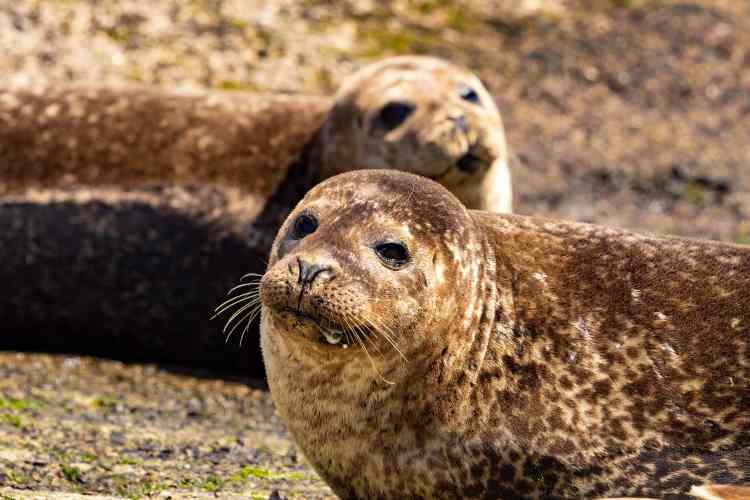
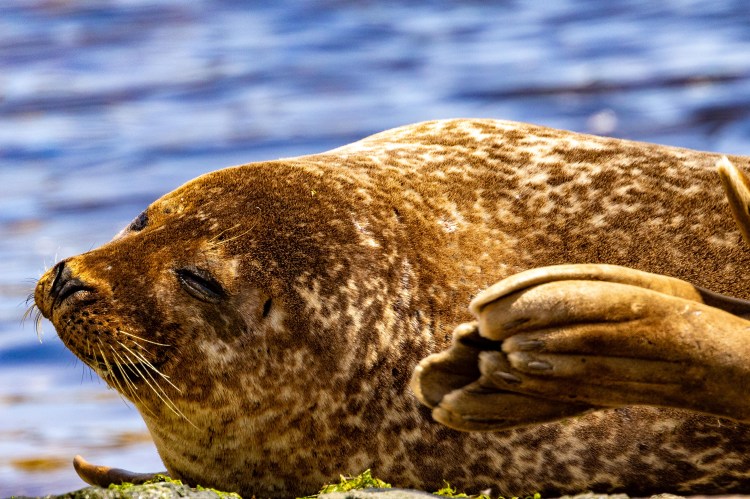
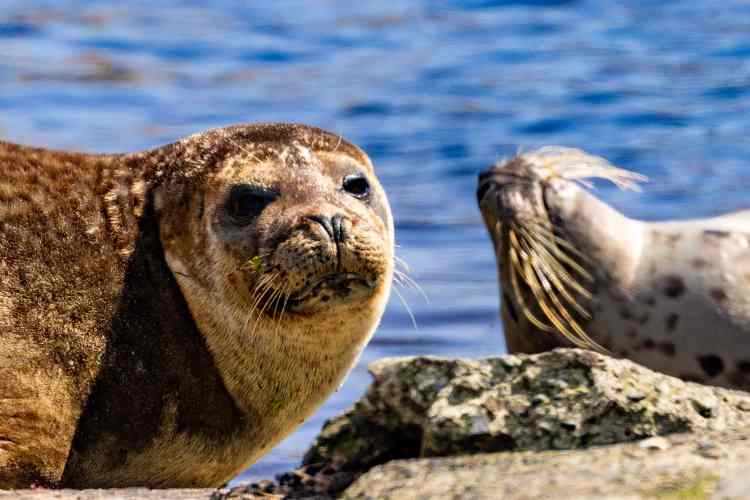
We were overlooking several Common Seals who were hauled out, they seemed very tolerant and allowed a few good photos. There are several ways to tell a common or harbour seals from a grey seal, a kinder rounder face, diagonal (not parallel) nostrils, the eyes are set a third back in the head (not half way back) and habitat (found in harbours versus more in open ocean).




A single Whooper Swan was enjoying the calm waters of the harbour too.


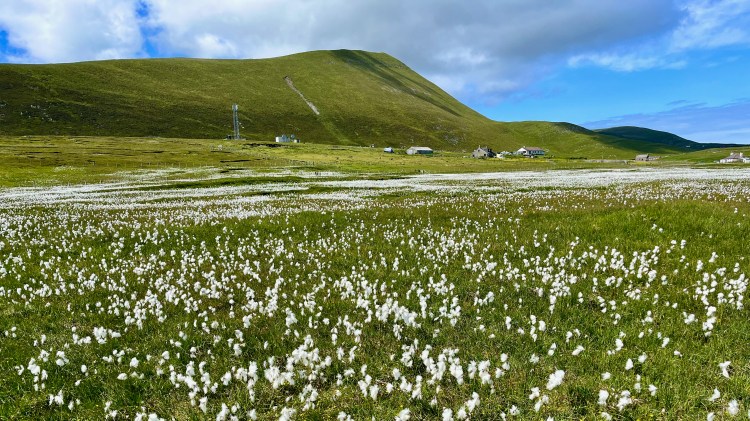
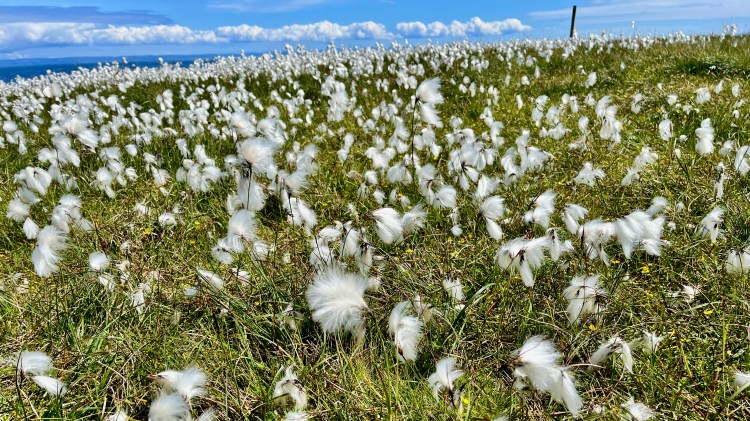
We walked up onto the coastal path which led to the airport and enjoyed fantastic views of meadows of Bog Cotton with the occasional Orchid thrown in.


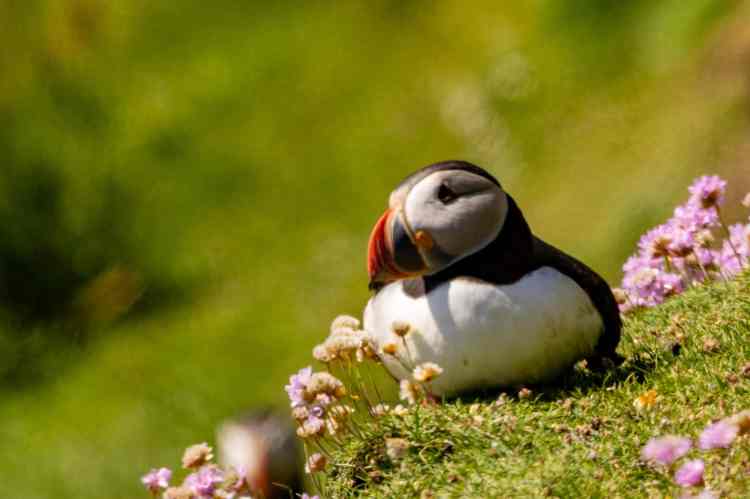
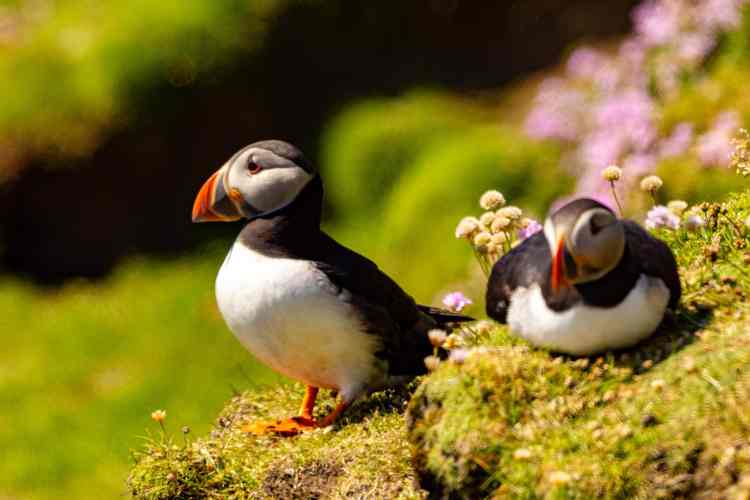
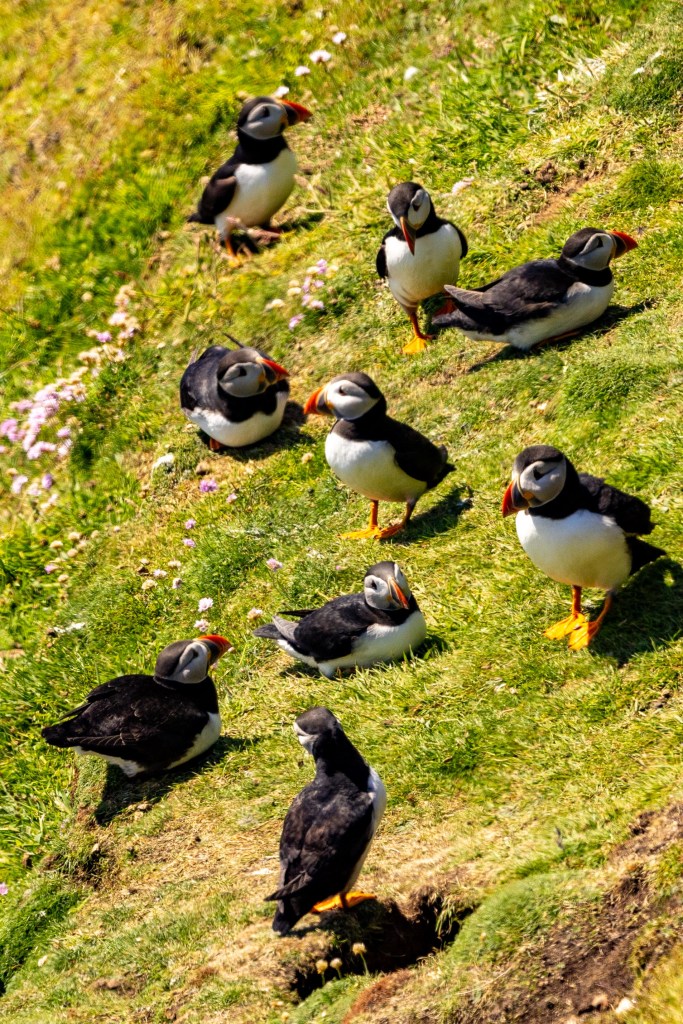
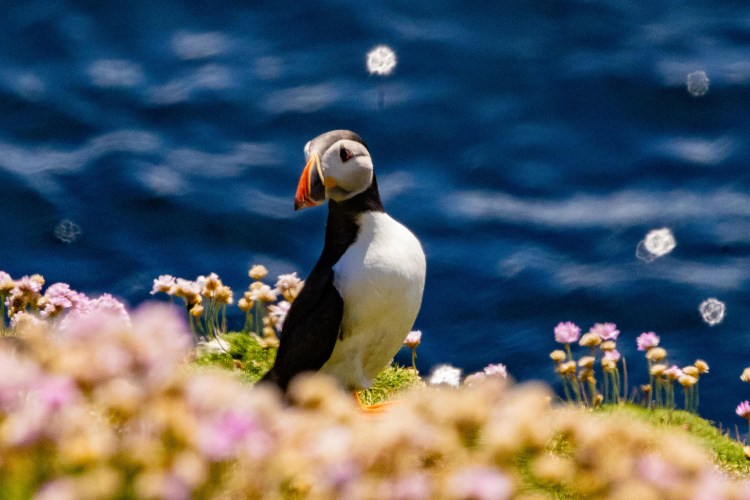
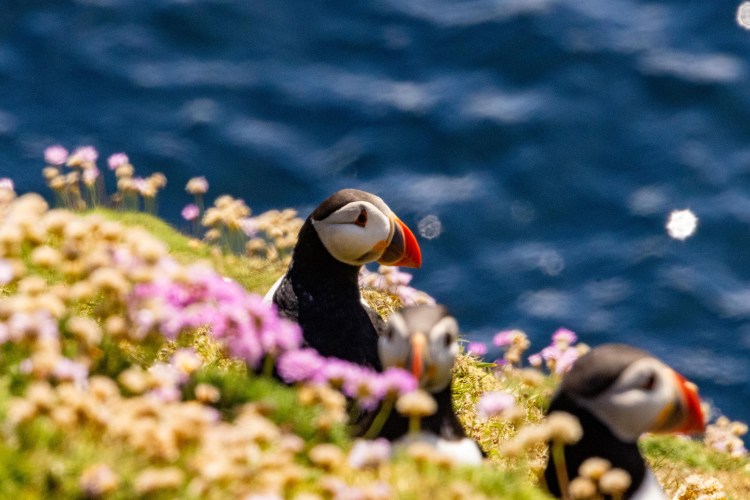
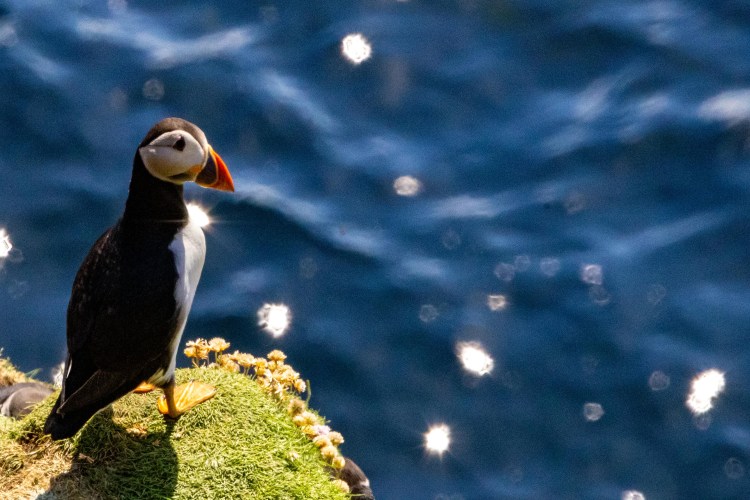
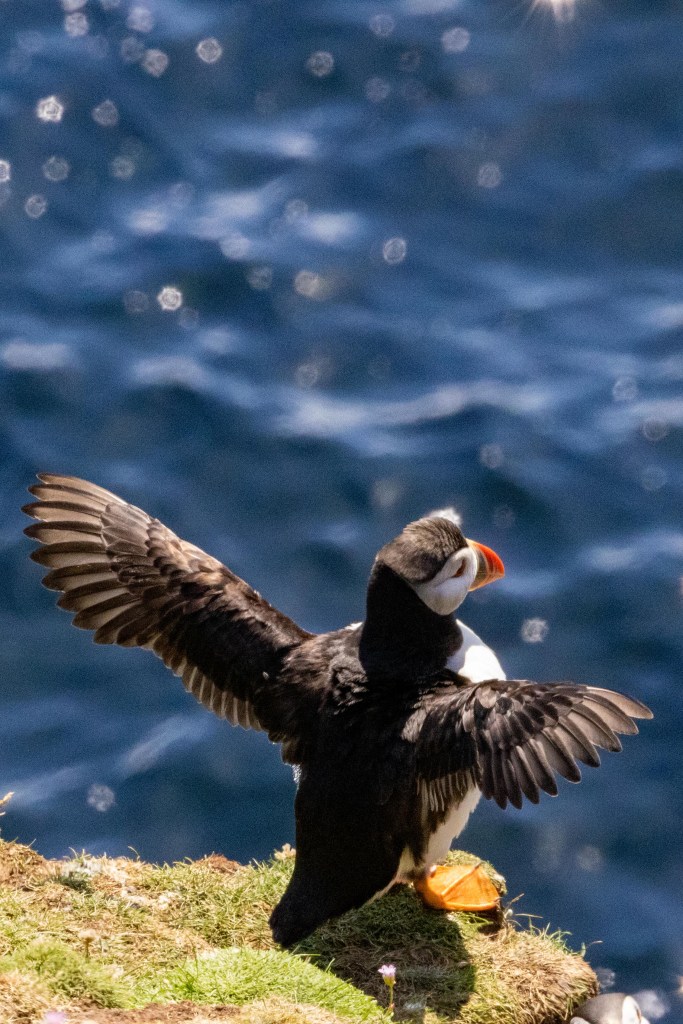
On this stretch of coast we also saw Puffins, lots of Puffins, more than we had seen anywhere on the mainland. I worked hard to position myself to get a clean background and also use the sun on the water to create good bokeh.
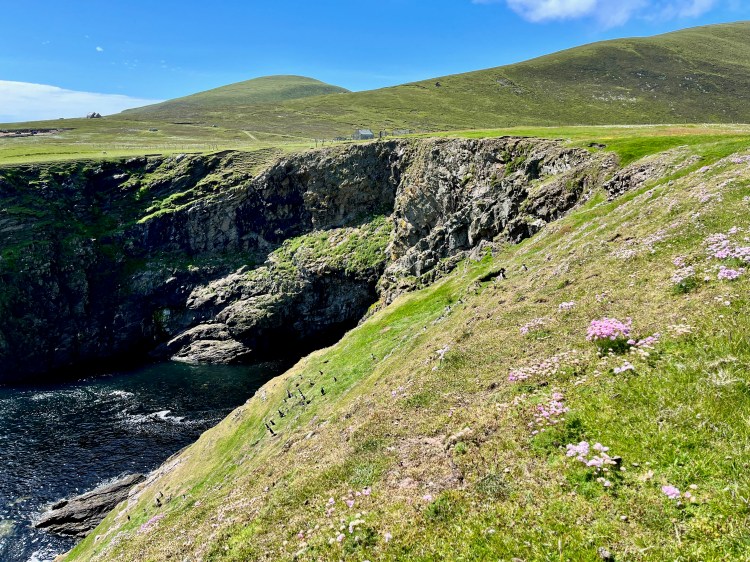

We had in mind to walk through Da Daal to Da Smaalie and if time come back over Da Noup (248m).

Initially this involved walking through numerous Great Skua territories but they were so spread out compared to pre-avian-flu times that they really didn’t bother us too much.
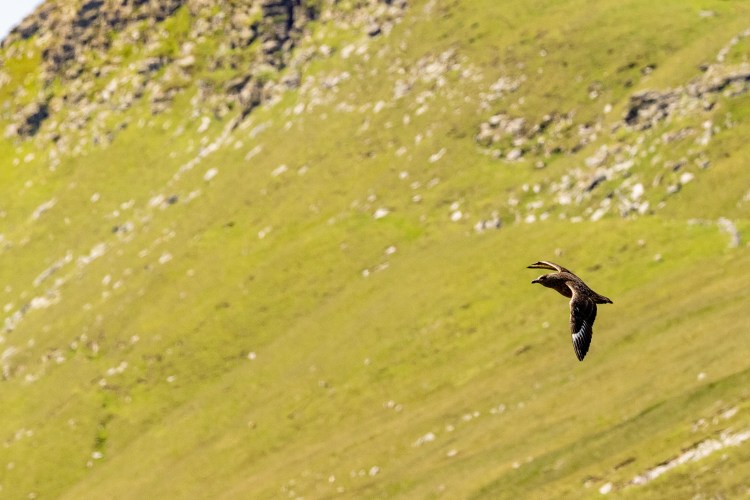
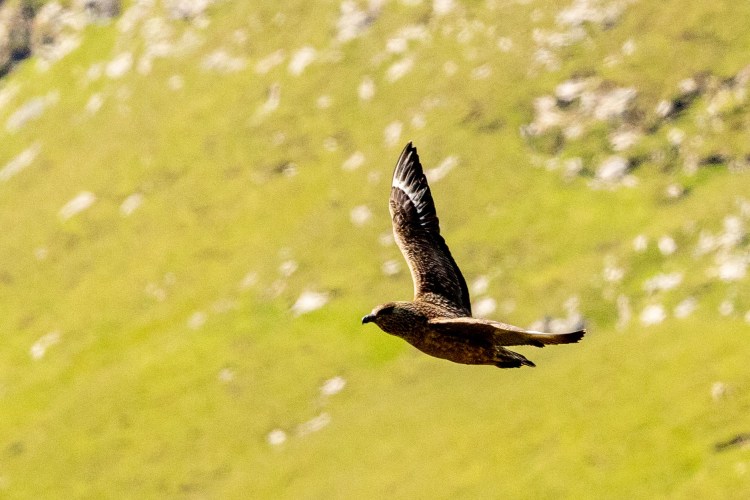
Reaching the end of Da Daal we got views out over Da Smaalie as we started to climb Da Noup.
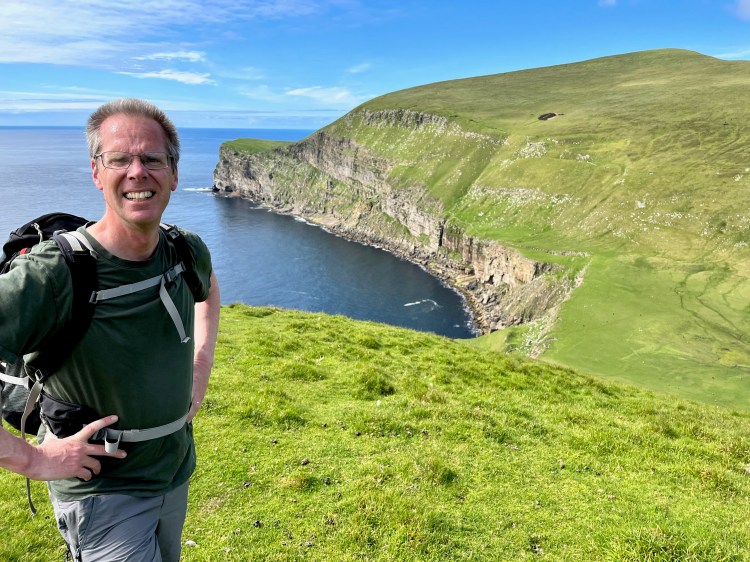
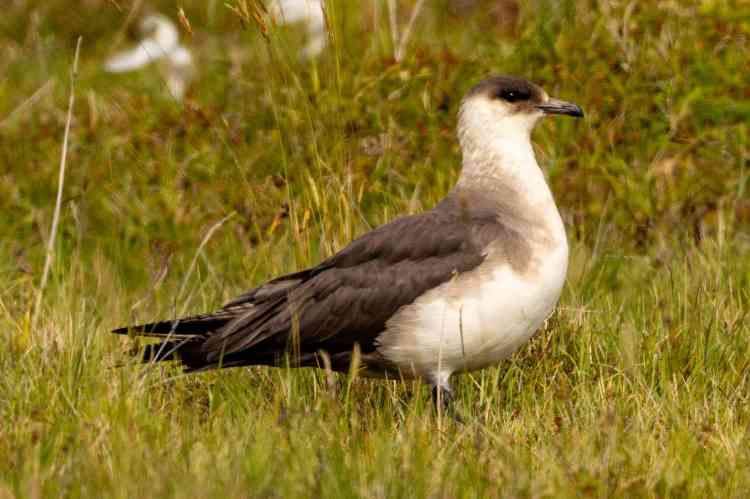
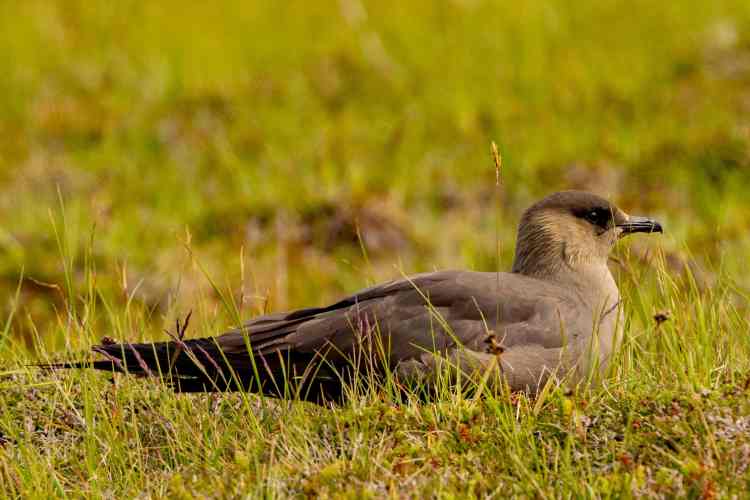
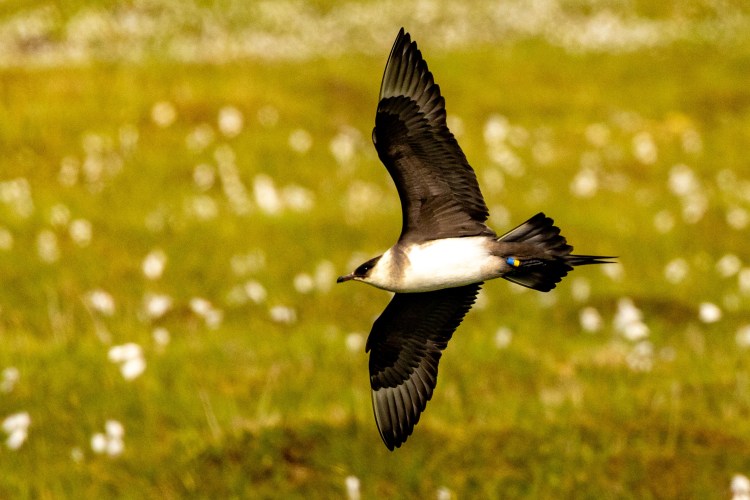
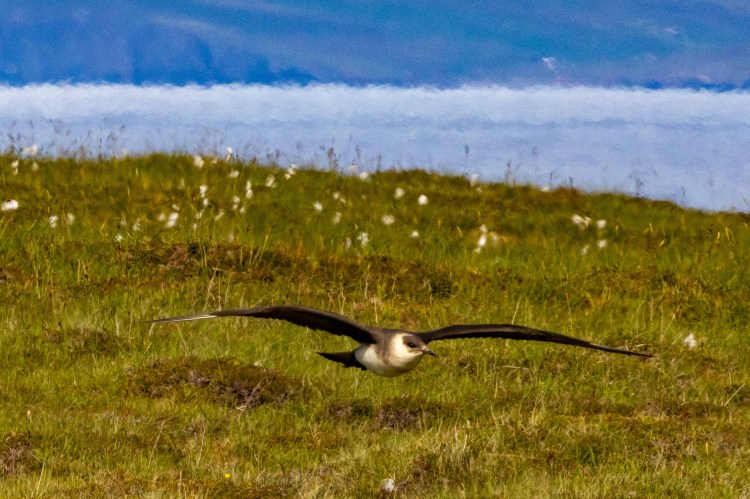
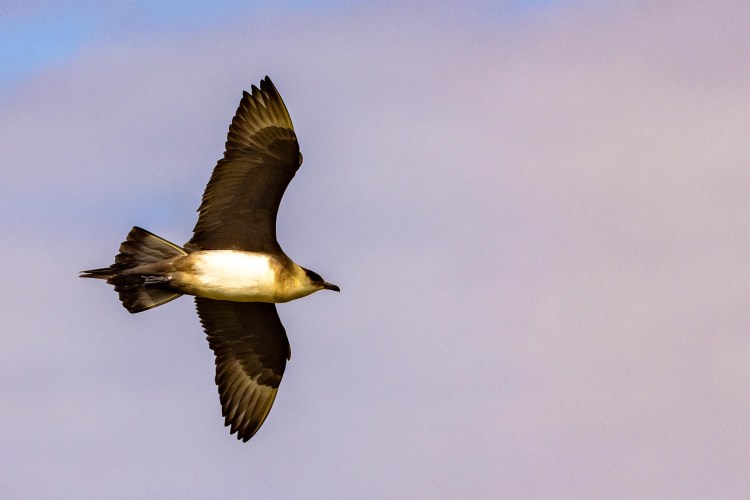
We returned to the houses at Da Biggins and checked out an Arctic Skua colony from the road. I was pleased to see a good number of pale morph birds.


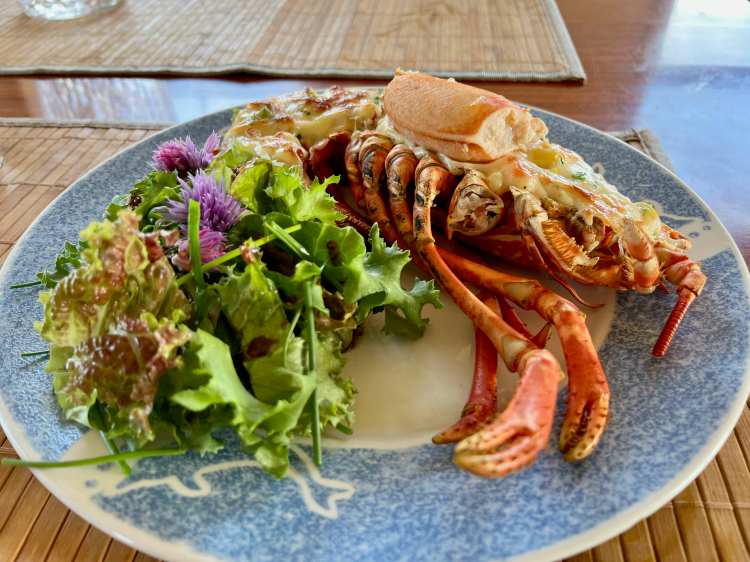
If anyone is inspired to visit Foula (which I would strongly recommend) then please splash out on a delicious three course meal with Ristie (advanced booking essential). Mai is of Burmese origin and a fantastic cook fusing Shetland ingredients with South-Asian culinary skills and flavours. Foula lamb, locally caught lobster and crab were the star ingredients.
On the way back to the boat we watched the rangers give a supplemental feed to the Arctic Skuas. The theory is that this is not enough for them to become dependent but enough to take some of the pressure off their usual prey species.

We were also pleased to see a few fantastic breeding plumage Golden Plovers from the road. Golden Plover in Golden Light – lovely.


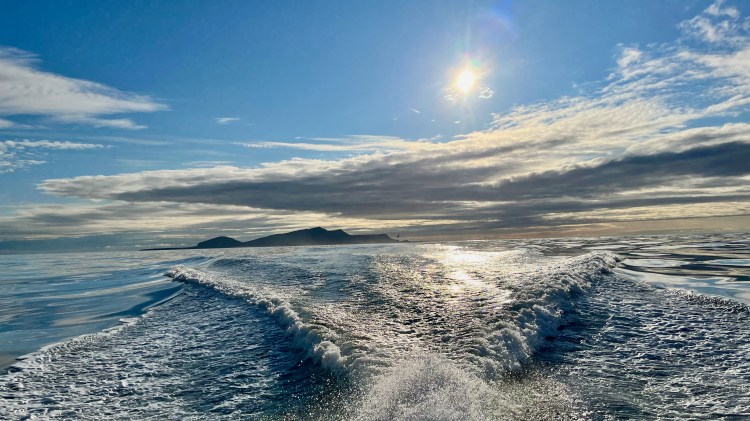
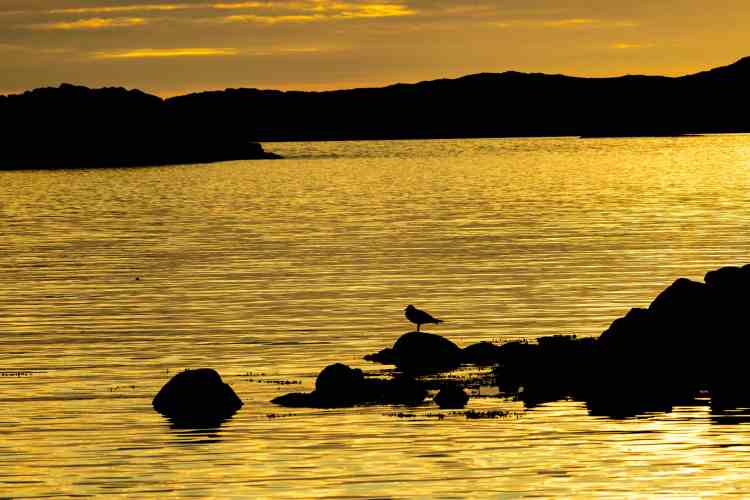
Once on the boat it was a smooth hour crossing back to the mainland with the setting sun backlighting the wonderfully remote island of Foula.
Discover more from WildScot Photography
Subscribe to get the latest posts sent to your email.
Beautiful memories of a wonderful day in Foula! It was great to meet you two!
Love all the pictures.
Looks like a remote dream of an island. One could find some peace there I would think. Per usual, fantastic captures!